 Current Location:
Leaf Spring
Clutch Plate
Clutch Pressure Plate
Oil Filter
Battery Clamp
Motorcycle Parts
Hydraulic Fittings
Brake Rotor
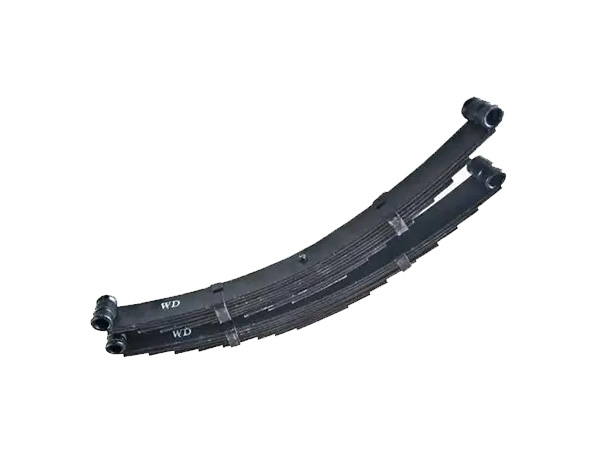
Construction Machinery Leaf Spring
Product Details
Construction machinery leaf spring is a heavy-duty suspension component specially developed for engineering and construction equipment, widely applied in dumpers, engineering trucks, mobile cranes, loader transport vehicles, road construction machinery and off-highway engineering trailers. Different from ordinary commercial vehicle leaf springs, construction machinery leaf springs are designed focusing on extreme load resistance, strong impact resistance and ultra-long fatigue life, adapting to severe working environments such as construction sites, mine roads, gravel roads, muddy terrain and frequent heavy-load start-stop conditions. As the core elastic supporting part between the frame and axle, it bears the main vehicle load, buffers violent road impact and maintains chassis stability, playing a decisive role in ensuring the safe and stable operation of engineering equipment.
Structurally, the construction machinery leaf spring adopts a thickened and reinforced multi-layer laminated steel structure, composed of high-strength main leaf, thickened auxiliary leaves, high-tensile center bolt, heavy-duty spring clips and wear-resistant buffer gaskets. The overall steel plate thickness and cross-sectional rigidity are significantly improved compared with standard truck springs, effectively resisting instantaneous impact and heavy pressure generated by uneven construction roads. The main leaf with reinforced rolling eyes ensures stable structural connection and strong tensile resistance, while the multi-stage superposed auxiliary leaves provide progressive stiffness, preventing excessive deformation under overload conditions. All leaf layers are firmly locked to avoid layer displacement, loosening or abnormal friction during severe vibration and bumpy driving.
The working principle relies on the high elastic toughness and structural stability of special alloy steel. When construction machinery travels on rugged, potholed and unpaved roads, strong vibration and instantaneous impact are directly transmitted to the leaf spring assembly. The thickened steel plates produce uniform elastic bending deformation to absorb massive impact energy and relieve chassis pressure, effectively protecting vehicle axles, brackets and cargo equipment from rigid damage. After impact disappears, the spring quickly recovers its original camber to maintain consistent suspension performance. In addition to shock absorption, it effectively limits axle offset, reduces body tilt and enhances overall vehicle stability during full-load transportation, climbing and sudden braking.
In terms of materials and craftsmanship, construction machinery leaf springs adopt high-grade 51CrV4 and 60Si2Mn alloy spring steel with higher hardness, tensile strength and impact toughness than ordinary spring materials. The whole manufacturing process complies with strict engineering machinery component standards, including precision blanking, heavy-duty hot forming, high-precision camber calibration, overall quenching and tempering heat treatment, intensive shot peening and thick anti-rust coating. The optimized heat treatment process ensures uniform internal metal structure, avoiding fatigue fracture caused by long-term alternating load. Shot peening eliminates surface stress concentration and greatly improves fatigue resistance, while thick electrophoretic and epoxy coating provides excellent protection against mud, sand, rainwater and corrosion.
Most construction machinery leaf springs adopt reinforced multi-leaf structure with large arc design, featuring high rigidity, strong compression resistance and overload resistance. Customized thickness, width, leaf quantity and arch height are available to match different tonnages of engineering vehicles and mining transport equipment. Compared with ordinary suspension springs, engineering-grade leaf springs have stronger structural stability, higher load limit and better anti-damage performance, capable of maintaining stable performance in long-term high-intensity operation.
With robust structure, extreme working condition adaptability, low failure rate and low maintenance cost, construction machinery leaf springs have become indispensable core parts for engineering and mining transport equipment. They effectively improve vehicle carrying capacity, driving stability and equipment durability, greatly reducing operating risks and maintenance costs for construction and mining industries.
BLOGS
-
How to Choose the Right Leaf Sp
2026-07-10 06:01:42Discover how to choose the right leaf spring for your heavy duty truck. Learn about load capacity, material types, and what to look for in a reliable leaf spring supplier....
MORE + -
Common Leaf Spring Problems and
2026-07-07 05:01:56Identify and resolve common leaf spring problems in fleet vehicles. Expert guide to diagnosing failures and implementing effective replacement solutions for commercial trucks....
MORE + -
Understanding Clutch Pressure P
2026-07-03 03:45:25Learn how the clutch pressure plate works and identify the signs that indicate it needs replacement. Expert guide for mechanics and vehicle owners on pressure plate diagnosis and selection....
MORE + -
Why do heavy vehicles need thic
2026-06-16 11:13:11Heavy-duty trucks, semi-trailer tractors and construction machinery operate under continuous high torque, heavy loads and frequent start-stop conditions, which generate severe mechanical pressure and thermal shock on clut...
MORE +