Current Location:
Why leaf spring has different arch height?
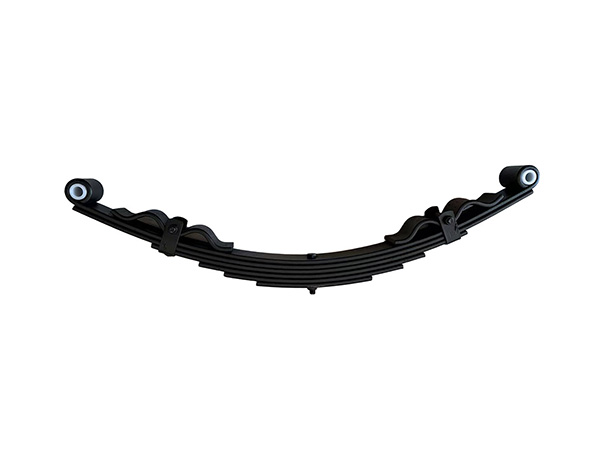
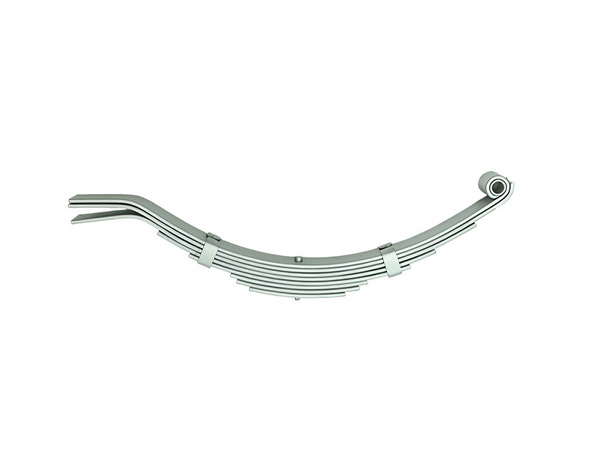
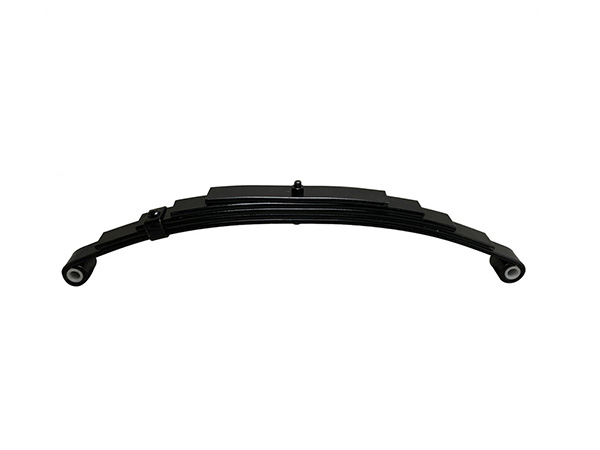
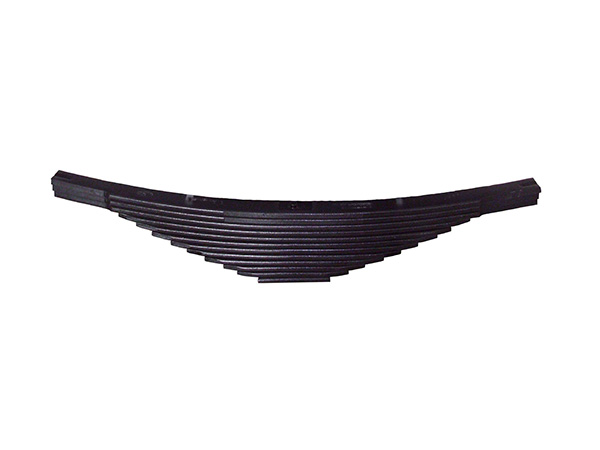
2026-06-16Arch height (free camber) refers to the vertical distance from the spring’s middle lowest point to the line connecting two spring eye ends under no-load condition. Different leaf springs are designed with distinct arch heights, determined by load matching, vehicle configuration, working conditions, structural type and manufacturing compensation rules. Uneven arch directly changes suspension stiffness, chassis ground clearance, load-bearing margin and anti-sagging performance. The core reasons for different arch heights are sorted as follows.
1. Match different axle tonnage and rated load capacity (primary reason)
The larger the design load of a leaf spring, the higher its original free arch height.
Light-load 10-ton axle spring: Small arch height. Under rated load, slight compression reaches standard chassis height; excessive arch would make the vehicle body too high and unstable during high-speed turning.
Standard 13–16 ton axle spring: Medium arch, the mainstream specification for highway semi-trailers. After loading rated cargo, the spring compresses moderately to keep balanced suspension geometry.
Heavy-duty 18–28 ton mining spring: Ultra-high arch design. Mining vehicles bear huge instantaneous impact load, and high arch reserves sufficient compression stroke. It avoids complete flattening, chassis bottoming and permanent sagging under full overload.
When load rises, higher arch provides more elastic deformation allowance to prevent plastic deformation.
2. Distinguish structural types: parabolic vs multi-leaf springs
Even with identical load grade, parabolic and multi-leaf springs adopt different arch curves:
Parabolic leaf springs: Soft linear elasticity, relatively low standard arch height. Their variable cross-section steel has uniform stress distribution, no need for excessive camber to support load; high arch would cause overly soft suspension and serious body bouncing.
Multi-leaf reinforced springs: Higher arch height. Stacked thin leaves have larger inter-leaf friction and stiffer overall rigidity. A larger initial arch compensates for rigid loss during long-term abrasion thinning.
3. Compensate natural arch attenuation after long service
All leaf springs gradually lose arch height under cyclic bending load (sagging failure). Manufacturers reserve extra arch margin based on service life positioning:
Long-distance highway fleets (service life 2–4 years): Slightly increased arch, to offset slow sagging after 100,000+ km and maintain normal chassis height in later service periods.
Short-cycle mining vehicles (service life below 1 year): Extra high arch compensation, counteract fast fatigue deformation caused by daily severe impact.
Cheap inferior springs with incomplete heat treatment: Small arch, lacking sagging compensation; chassis sinks obviously after short mileage.
4. Adapt special vehicle working scenarios
Different transportation environments require targeted arch height adjustment:
Mountain climbing transport vehicles: Higher arch. Frequent uphill/downhill creates large front-rear load transfer; extra camber prevents the frame from scraping the road surface under dynamic load.
Low-floor container semi-trailers: Reduced arch height. Meet low-cargo-center-of-gravity design requirements to improve driving rollover resistance.
Front steering axle leaf springs of 6×4 tractors: Much lower arch than rear balance suspension springs. Front axle load is only 6–8 tons, and low arch ensures stable steering wheel positioning without excessive lifting of the cab.
Tri-axle balance suspension: Three groups of springs adopt unified matched arch height; inconsistent camber will lead to single axle overloading and unilateral tire wear.
5. Balance left-right chassis level during assembly
Even same-model spring pairs have tiny arch height differences (controlled within factory tolerance ≤3 mm):
Strict sorting before assembly: Match two springs with close camber for left and right sides. If arch height differs greatly, one side chassis sinks, causing body tilt, steering deviation and eccentric tire wear.
Replacement maintenance rule: Never install a high-arch spring on one side and low-arch on the other; replace paired springs simultaneously to keep consistent camber.
6. Manufacturing heat treatment deformation correction allowance
During quenching and tempering, leaf springs produce tiny irregular arch shrinkage. Factories set a design arch target slightly higher than the finished standard size, to reserve correction space for post-heat-treatment cold straightening. Different steel thickness and leaf layers lead to different heat shrinkage volumes, hence different reserved arch compensation values.
7. Adjust suspension stiffness and shock absorption performance
Arch height changes the spring’s effective force arm and elastic stiffness:
Higher arch: Softer initial stiffness, better shock absorption for bumpy roads, larger compression stroke.
Lower arch: Harder stiffness, smaller vertical bounce amplitude, more stable high-speed straight-line driving, suitable for flat highway full-load running.
Manufacturers adjust camber to balance comfort and stability according to vehicle positioning.
Consequences of mismatched arch height
Chassis height difference left and right, vehicle pulling to one side;
Premature sagging or excessive body bouncing;
Uneven axle load distribution, accelerated single spring fatigue fracture;
Wheel alignment parameters disorder, severe eccentric tire wear.
In summary, leaf springs have different arch heights mainly to match varying axle load tonnage, distinguish parabolic/multi-leaf structural stiffness, compensate long-term service sagging, adapt mountain, low-floor, front/rear axle special working conditions, balance left-right chassis horizontal level, offset heat treatment deformation, and adjust suspension shock-absorbing stiffness. Arch height is a core design parameter directly linked to vehicle load capacity and driving stability.
1. APA 7th Edition
Zhang, L. (2026). Design principle and classification basis of different free arch heights for heavy-duty vehicle leaf springs. Suspension Elastic Component Design Technology, 2(1), 209–216.
2. MLA 9th Edition
Zhang, Lei. "Design Principle and Classification Basis of Different Free Arch Heights for Heavy-Duty Vehicle Leaf Springs." Suspension Elastic Component Design Technology, vol. 2, no. 1, 2026, pp. 209–216.
3. GBT 7714-2015
Zhang Lei. Design principles and grading basis for different free arch heights of steel plate springs for heavy-duty vehicles [J]. Design Technology of Suspension Elastic Elements, 2026, 2 (1): 209-216