Current Location:
How is heavy truck leaf spring manufactured?
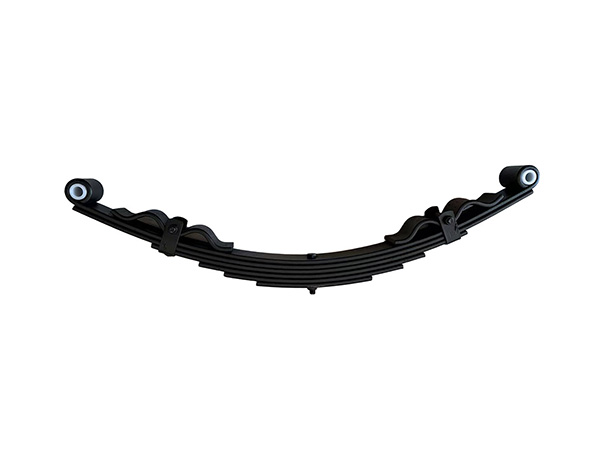
2026-06-16The production of heavy-duty truck leaf springs follows a standardized full industrial workflow, covering raw material blanking, hot forming, precise heat treatment, surface strengthening, anti-corrosion coating and assembly inspection. Two mainstream product lines are included: conventional multi-leaf leaf springs and variable cross-section parabolic leaf springs. The complete manufacturing steps are detailed below.
1. Raw Material Selection and Cutting Blanking
Material selection
Qualified heavy truck leaf springs adopt two core alloy spring steels:
60Si2Mn silicon-manganese spring steel: Standard material for highway logistics vehicles, balanced cost and fatigue resistance.
50CrV4 chromium-vanadium spring steel: Premium grade for mining dumpers and overloaded transport vehicles, superior impact and high-temperature resistance.
Low-carbon steel and recycled scrap steel are rejected for heavy-duty models due to insufficient elasticity.
Blanking processing
Steel coils are uncoiled and leveled to eliminate rolling bending deformation.
CNC cutting machines cut steel strips into single leaf blanks according to drawing dimensions, including fixed-thickness blanks for multi-leaf springs and tapered blanks for parabolic springs.
Edge deburring removes sharp cutting notches; rough edges will form stress concentration points and cause early cracking during service.
Normalizing heat treatment: Heat blanks to 860–900°C then air cool, refine metal grains and release internal rolling stress for better forming performance.
2. Hot Bending Arch Forming (Core Shaping Process)
This step locks the designed free arch height, the core geometric parameter determining load capacity and cushion performance.
Transfer cut steel blanks to heating furnaces, uniformly heat to 900–950°C to reach plastic state.
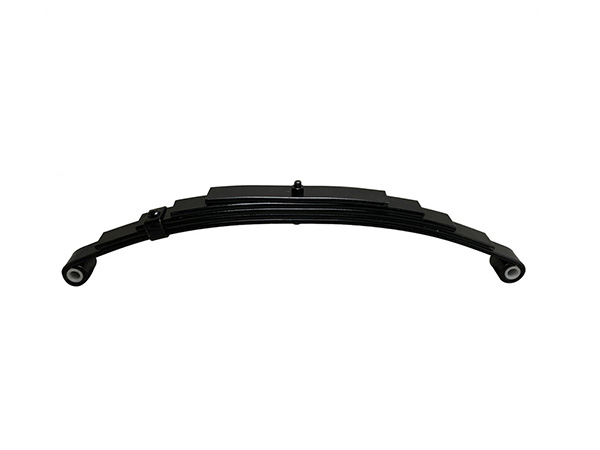
For multi-leaf springs: Press hot blanks on fixed arch molds to form uniform upward camber, air cool to fix curvature.
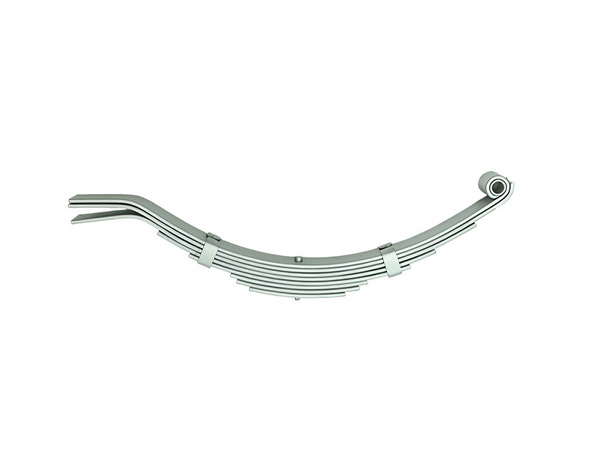
For parabolic leaf springs: Use special variable cross-section rolling molds during hot pressing to realize gradual thickness change from the middle to both leaf ends, completing the unique tapered profile in one molding step.
Punch spring eye holes at both ends of main leaves while the steel remains hot; hot punching avoids cold stamping microcracks around the eye root, the highest stress area of the whole spring.
Forge thickened reinforced lugs on main leaf ends for heavy mining springs to strengthen anti-fracture performance under impact load.
3. Complete Heat Treatment to Tune Elasticity and Toughness
Formed semi-finished leaves lack stable mechanical properties; full heat treatment is mandatory for all heavy truck leaf springs.
Integral quenching: Reheat formed leaves to 850–880°C, rapidly immerse in polymer quenching liquid for fast cooling, convert internal metal structure to high-strength martensite, lift tensile strength and elastic limit. Hardness target: HRC 48–55.
Medium-temperature tempering: Heat quenched brittle steel to 480–520°C with heat preservation, eliminate quenching internal tensile stress, balance hardness and impact toughness to prevent brittle fracture under bump impact.
Flatness correction: Minor arch deformation generated during heat treatment is corrected by small-pressure cold pressing to restore standard camber size.
4. Shot Peening Surface Strengthening
Classified as mechanical strengthening, an indispensable procedure for heavy-duty leaf springs:
High-speed steel shot blasts uniformly on the tension surface of every leaf spring.
Forms a 0.1–0.3 mm deep compressive stress layer on the steel surface, which offsets tensile stress generated during driving bending, inhibits microcrack growth and extends fatigue life by over 30%.
Mining-grade leaf springs adopt double intensive shot peening to adapt frequent severe impact.
Low-temperature stress relief tempering (180–220°C) after shot peening stabilizes the compressive stress layer and removes residual impact stress from blasting.
5. Anti-Rust Surface Coating Treatment
Bare alloy steel easily corrodes under mud, rain and deicing salt; electrostatic painting is standard finishing:
Shot blasting cleaning removes surface oxidation scale and rust.
Electrostatic spraying of high-adhesion anti-rust primer and topcoat evenly covers every leaf, including spring eye inner walls and leaf edge gaps.
High-temperature baking cures the paint film to form a dense isolation barrier against corrosive media.
6. Assembly of Complete Leaf Spring Assembly
Separate single leaves are combined into a finished suspension component:
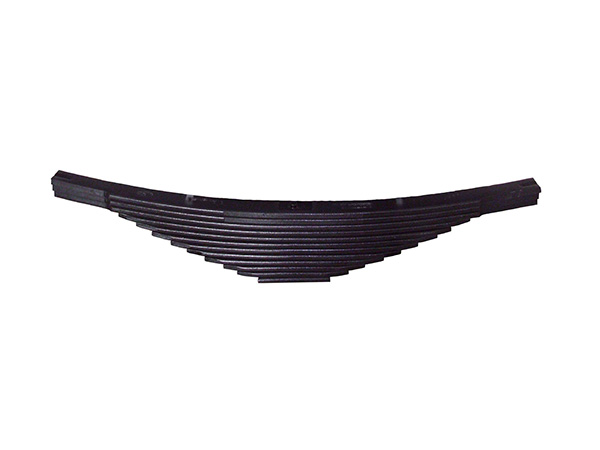
Sort leaves by thickness and length from longest main leaf to shortest auxiliary leaves.
Install high-temperature resistant nylon anti-wear gaskets between every two leaves to avoid direct metal friction and abnormal squeaking noise.
Penetrate center bolt through reserved middle holes of all leaves, tighten with torque wrench to lock leaf stack alignment.
Assemble auxiliary accessories: rubber shackle bushings, wear-resistant spring eye sleeves, suspension limiting blocks for heavy-duty versions.
7. Static Load Performance Testing & Finished Product Inspection
All assemblies pass strict quality testing before factory delivery:
Arch height measurement: Verify free camber matches drawing tolerance range.
Static load compression test: Apply graded vertical pressure, record deformation and rebound data to check elastic recovery performance; reject products with permanent sag after unloading.
Appearance full inspection: Screen for paint peeling, surface cracks, uneven thickness and assembly dislocation.
Sampling fatigue cycle test: Simulate millions of cyclic bending loads on test benches; only springs without crack generation pass heavy truck production standards.
Qualified products are labeled with tonnage grade, steel material model and production batch number for traceability.
8. Packaging and Storage
Finished leaf spring assemblies are bundled and wrapped with waterproof film to prevent transportation rust and collision scratches, then stored in dry warehouses waiting for shipment to vehicle manufacturers or aftermarket maintenance markets.
Process difference summary
Multi-leaf spring production: More blank cutting steps, simple fixed-thickness hot forming, more assembly leaves.
Parabolic leaf spring production: Single/two tapered leaves, special variable cross-section hot rolling mold, fewer assembly parts, lighter finished weight.
In summary, heavy truck leaf spring manufacturing follows a closed-loop industrial chain: raw material blanking → hot arch forming → quenching & tempering heat treatment → shot peening strengthening → electrostatic anti-rust painting → leaf assembly → load performance testing. Each process directly determines the spring’s load resistance, anti-fatigue life and shock absorption performance for heavy commercial vehicles.
1. APA 7th Edition
Zhang, L. (2026). Full manufacturing process and quality control specification of leaf springs for heavy-duty commercial trucks. Automotive Heavy Component Manufacturing Technology, 2(1), 201–208.
2. MLA 9th Edition
Zhang, Lei. "Full Manufacturing Process and Quality Control Specification of Leaf Springs for Heavy-Duty Commercial Trucks." Automotive Heavy Component Manufacturing Technology, vol. 2, no. 1, 2026, pp. 201–208.
3. GBT 7714-2015
Zhang Lei. Complete Manufacturing Process and Quality Control Specification for Heavy duty Truck Steel Plate Springs [J]. Manufacturing Technology of Heavy duty Automotive Parts, 2026, 2 (1): 201-208