Current Location:
How to replace trailer leaf spring step by step?
2026-06-16This complete step-by-step guide covers safe disassembly, component matching, installation, torque tightening and post-replacement inspection for single/tri-axle semi-trailer leaf springs. Proper tools, safety procedures and standardized torque values are included to avoid uneven chassis height, spring offset, loose U-bolts and premature fracture.
Pre-Work Preparation & Safety Rules
Required Tools
Jack, heavy-duty axle stands, torque wrench, socket set, pry bar, wire brush, high-temperature lithium grease, new leaf spring assembly, matching rubber bushings, anti-wear gaskets, new U-bolts & nuts, anti-rust spray.
Critical Safety Notes
Park trailer on flat solid ground, block all wheels front and rear with wheel chocks.
Fully unload all cargo; replacing springs under load will cause sudden chassis drop and injury.
Never rely only on a hydraulic jack—always support frame with heavy axle stands before crawling under the trailer.
Wear safety gloves and goggles; rusted steel fragments and flying bolts may cause injury.
Step 1: Lift the trailer and secure support
Place the jack under the trailer main frame beam above the damaged leaf spring axle seat, lift slowly until the target axle loses weight and tires touch the ground lightly.
Slide two heavy-duty axle stands under the frame left and right of the replacement position, lower jack slightly to transfer frame weight onto stands.
Double-check wheel chocks and stand stability; rock the trailer gently to confirm no shifting before entering undercarriage.
Step 2: Remove old U-bolt fasteners
Use a wire brush to clear mud, rust and debris off U-bolt nuts and threads; spray rust penetrant if bolts are seized.
Loosen all four U-bolt nuts with socket wrench, completely remove nuts and base plates, take off U-bolts.
Separate the leaf spring stack from the axle seat; pry lightly with a pry bar if rust sticks the spring to the axle saddle.
Step 3: Disconnect spring eye and shackle pins
Locate front fixed spring eye and rear movable shackle assembly at both ends of the leaf spring.
Remove cotter pins on shackle/eye pins, unscrew pin nuts, pull out metal pins with a hammer and punch.
Detach the entire worn leaf spring assembly from frame hanger and rear shackle; slide the old spring out from below the trailer.
Clean frame hangers, shackle brackets and pin holes thoroughly to clear rust, abrasive powder and old dry grease. Inspect hangers and shackles for bending, cracking or deformation—replace damaged brackets together.
Step 4: Prepare new leaf spring assembly
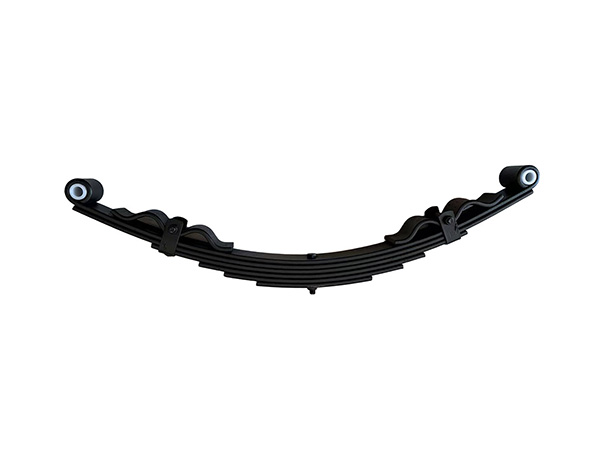
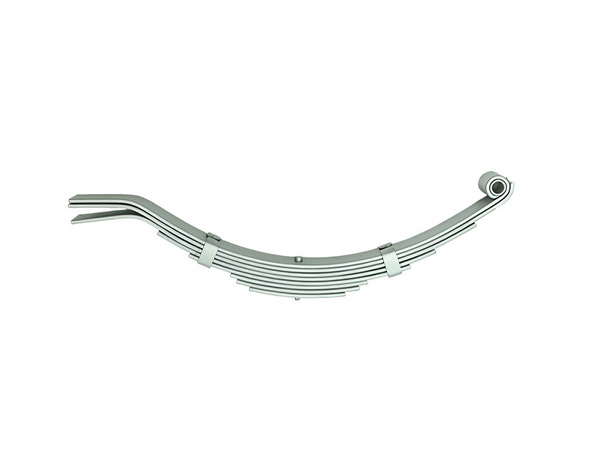
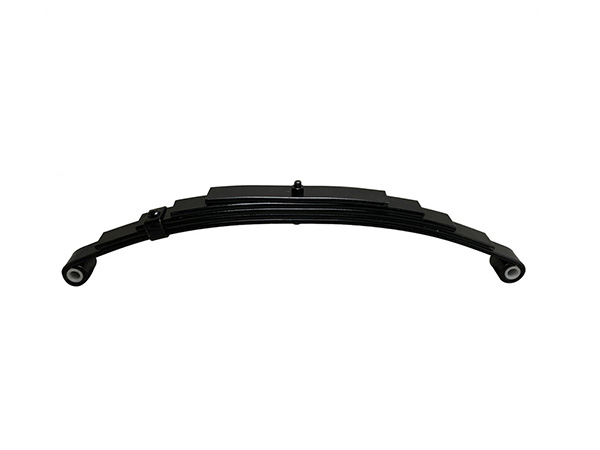
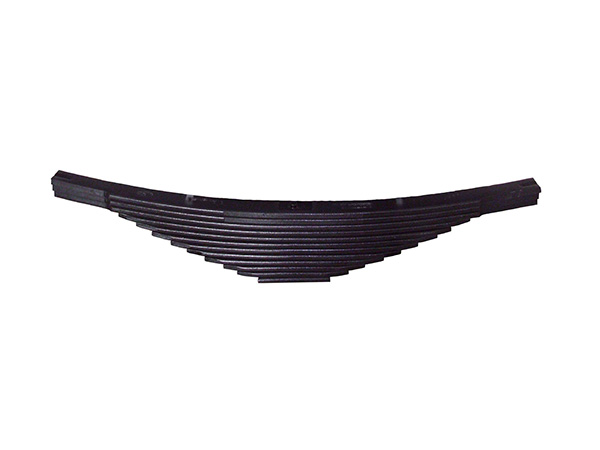
Verify specifications match original: axle tonnage, arch height, leaf quantity, steel width, center hole position, eye size. Do not mix parabolic and multi-leaf springs on one axle.
Install brand-new rubber bushings into front spring eye and rear shackle holes; worn old bushings cause squeaking and uneven stress.
Fit nylon anti-wear gaskets between every leaf layer of multi-leaf springs; evenly coat high-temperature grease on both sides of each leaf surface, spring eye inner wall and shackle pin contact area.
Align all leaf center holes, thread the center bolt and tighten moderately to keep leaves stacked neatly without lateral shifting.
Step 5: Mount new leaf spring to frame hangers and shackles
Lift the new spring assembly into position under the frame; align front spring eye with the fixed frame hanger hole.
Insert the front metal pin through hanger and spring eye, install nut and lock cotter pin.
Connect rear spring eye to the movable shackle plate, push the rear pin through aligned holes, fasten nut and lock with cotter pin. Confirm the shackle swings freely without jamming or binding.
Step 6: Fix leaf spring onto axle saddle with U-bolts
Center the leaf spring stack precisely on the axle seat saddle; ensure no left/right offset, misalignment will cause unilateral wear and rubbing.
Place U-bolts over the top of the leaf spring, pass both legs through the holes of the axle base plate.
Hand-screw all U-bolt nuts evenly to pre-clamp the spring stack; do not fully torque yet.
Step 7: Standardized torque tightening (key step to avoid loose springs)
Lower the hydraulic jack slightly to let the axle rest naturally on the leaf spring (simulate light empty vehicle load, eliminate abnormal pre-stress).
Tighten four U-bolt nuts symmetrically in a cross pattern with a torque wrench:
10–13 ton axle U-bolts: 450–500 N·m
16–20 ton heavy/mining axle U-bolts: 550–650 N·m
Retighten shackle and spring eye pin nuts to factory torque specification, install new cotter pins to lock all pins to prevent nut loosening during driving.
Step 8: Anti-rust finishing and gap inspection
Spray full anti-rust coating on the whole leaf spring surface, spring eyes, shackles and U-bolt metal parts.
Check clearance between spring stack and frame limit blocks, brake lines, tire inner wall; ensure no contact or rubbing when the spring compresses.
Step 9: Remove support tools and lower trailer
Retract the hydraulic jack slightly to lift frame weight off axle stands, slide out all stands completely from under the trailer.
Slowly lower the jack until all tires bear full vehicle weight; remove wheel chocks.
Step 10: Post-replacement road test & secondary retorque
Walk around the trailer to compare left and right chassis ground clearance; height difference must be less than 10 mm, otherwise re-center the spring and retorque U-bolts.
Drive the trailer at low speed (below 30 km/h) on flat ground, pass small speed bumps to check for squeaking, rattling or abnormal tilting.
After traveling 50–100 km empty, lift the trailer again and retorque all U-bolts once more. New leaves will slightly settle after initial compression, leading to minor bolt loosening if not re-tightened.
Common Mistakes to Avoid
Replacing only one side spring with mismatched arch height, causing body tilt and eccentric tire wear.
Skipping anti-wear gaskets or lubrication, leading to rapid inter-leaf abrasion and squeaking noise.
Tightening U-bolts fully while the axle is suspended (no load), creating permanent pre-bending stress on the spring.
Reusing cracked, hardened old rubber bushings or deformed shackles.
Uneven U-bolt torque leading to spring lateral displacement and rubbing against frame brackets.
1. APA 7th Edition
Zhang, L. (2026). Standard disassembly and replacement operation specification of leaf springs for semi-trailers. Trailer Chassis Maintenance Technology, 2(1), 217–224.
2. MLA 9th Edition
Zhang, Lei. "Standard Disassembly and Replacement Operation Specification of Leaf Springs for Semi-Trailers." Trailer Chassis Maintenance Technology, vol. 2, no. 1, 2026, pp. 217–224.
3. GBT 7714-2015
Zhang Lei. Standard disassembly and replacement operation specifications for semi-trailer steel plate springs [J]. Trailer chassis maintenance technology, 2026, 217-224