Current Location:
How to Maintain and Inspect Leaf Springs for Optimal Vehicle Performance
2026-07-17Routine maintenance of leaf spring suspension systems is one of the most cost-effective practices a fleet operator can adopt. Leaf springs are often treated as a set-it-and-forget-it component, but regular inspection and timely maintenance can prevent roadside breakdowns, extend component life, and maintain the safety and stability of the vehicle under all load conditions.
Why Leaf Spring Maintenance is Often Overlooked
Unlike brake pads or oil filters, leaf springs are largely hidden beneath the vehicle body and axle. Their gradual degradation is easy to miss until a serious problem develops. By the time a driver notices a sagging ride height, uneven tire wear, or a clunking noise over bumps, the spring may already be near failure. A proactive inspection routine catches these issues before they become dangerous or expensive.
Fleet maintenance records consistently show that vehicles with regular suspension inspections experience fewer unplanned downtime events and have lower total maintenance costs per mile compared to vehicles maintained reactively.
Visual Inspection: What to Look For
The first and most important maintenance step is a thorough visual inspection performed at regular intervals. For commercial vehicles operating in heavy duty conditions, a visual inspection should be part of every pre-trip check and a more detailed inspection should be performed during scheduled service intervals, typically every 20,000 to 30,000 kilometers.
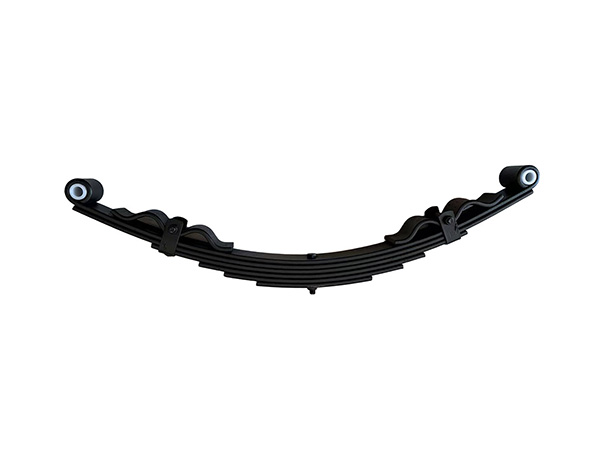
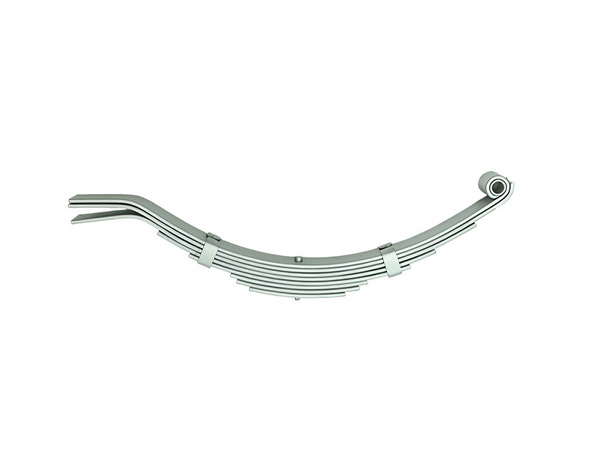
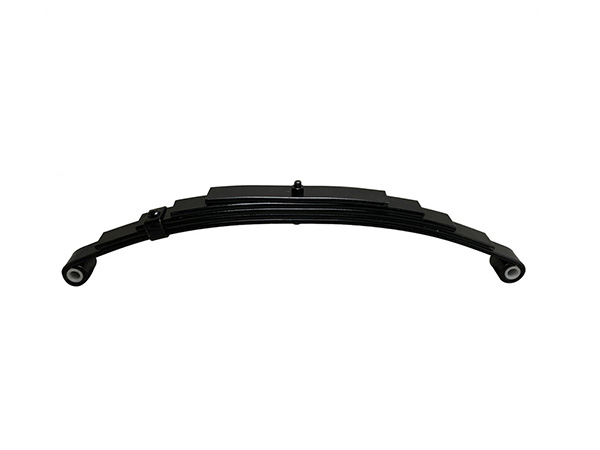
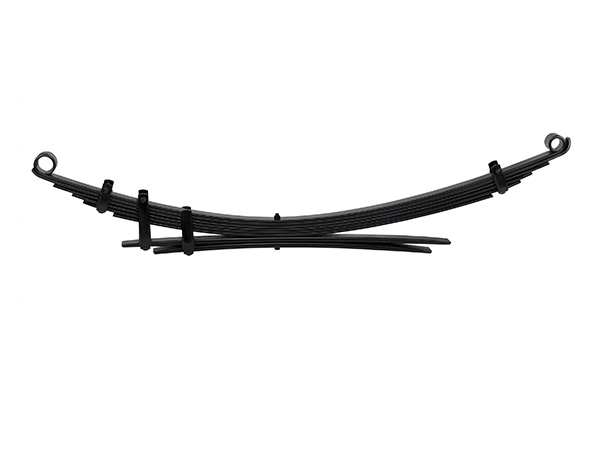
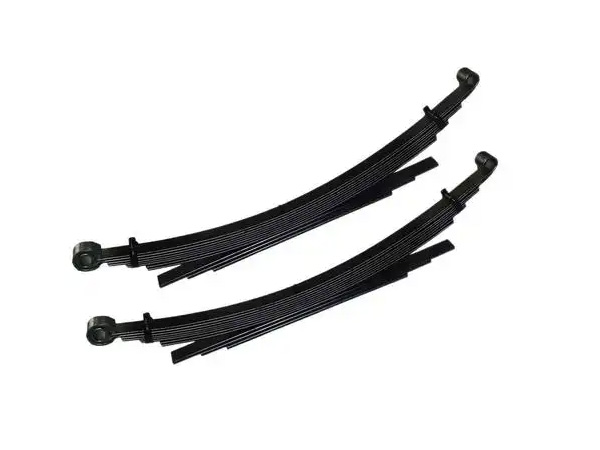
During inspection, examine each spring assembly from below the vehicle. Look for the following indicators of wear or damage:
Cracked or broken leaves: Any visible crack, especially near the eyelet or center bolt area, is a sign of fatigue damage and requires immediate replacement.
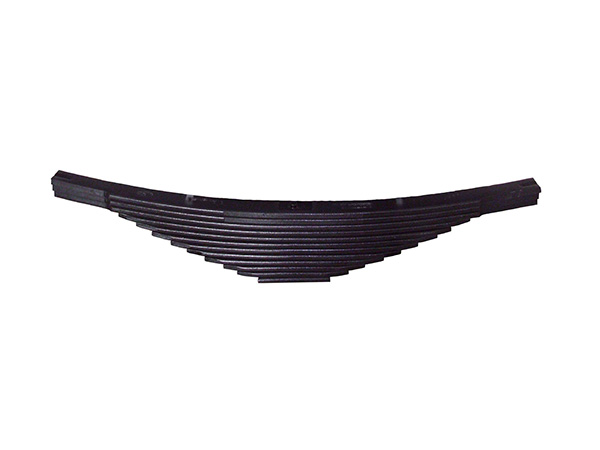
Excessive sag or loss of arch: Over time, leaf springs lose their original arch height due to material fatigue and residual stress relaxation. A noticeably flattened spring will not support the load properly and should be replaced.
Corrosion and pitting: Surface corrosion is common but becomes dangerous when it penetrates into the steel grain structure. Pay particular attention to areas near bolt holes and the center clamp.
Loose or missing fasteners: Check the center bolt, rebound clips, and mounting bushings. Loose hardware can cause the spring assembly to shift, creating dangerous misalignment.
Damaged bushings: The rubber or polyurethane bushings at the spring eyes absorb vibration and allow controlled movement. Worn or cracked bushings should be replaced promptly.
Measuring Ride Height as a Diagnostic Tool
Ride height measurement is one of the most objective indicators of leaf spring condition. Each vehicle model has a specified ride height measured from the frame to the ground at each corner. Significant deviation from the specification — particularly at the rear axle — often indicates weakened or broken springs.
Record ride height measurements at each maintenance inspection and track them over time. A gradual decrease in rear ride height typically signals progressive spring fatigue. A sudden drop may indicate a broken leaf or failed mounting component that requires immediate attention.
Lubrication and Corrosion Prevention
Inter-leaf friction is a major source of wear in multi-leaf spring assemblies. Regular lubrication of the contact surfaces between leaves can significantly extend spring life by reducing friction-induced wear and preventing moisture from accumulating between leaves.
Apply a suitable chassis lubricant or graphite-based lubricant between the leaves during service intervals. Be careful not to over-lubricate, as excess grease can attract debris. For vehicles operating in corrosive environments, apply a protective coating such as rubberized undercoating or a dedicated spring coat to the assembled spring after lubrication.
Common Mistakes to Avoid
Several maintenance practices — while well-intentioned — can actually accelerate leaf spring failure. Avoid the following:
Tightening rebound clips beyond specification: Over-tightened rebound clips restrict natural leaf movement and create stress concentrations that promote cracking.
Mixing leaves from different spring sets: Individual leaves within a spring pack are precision matched for length, thickness, and arch. Mixing leaves can cause uneven load distribution.
Using the wrong center bolt: The center bolt must be the correct diameter and thread pitch. An undersized bolt can shear under load.
Neglecting the companion axle: On tandem axle vehicles, a failed spring on one axle places additional load on the other. Always inspect both sides and consider replacing both springs simultaneously.
When to Replace Leaf Springs
Leaf springs should be replaced when any of the following conditions are observed: visible cracks in any leaf, loss of more than 10% of original free arch height, corrosion that reduces leaf thickness by more than 15%, or persistent noise and vibration that does not resolve with lubrication and fastener adjustments.
When replacing springs, source replacements from a reputable manufacturer or supplier that provides springs meeting or exceeding the original specifications. Quality replacement springs should be verified against the original part dimensions and spring rate specifications.
Conclusion
Regular inspection and maintenance of leaf spring assemblies is a straightforward but often neglected aspect of vehicle upkeep. A systematic inspection routine, combined with timely replacement of worn components, keeps commercial vehicles safe, stable, and on the road.
References
Society of Automotive Engineers. (2020). SAE J2676: Service Maintenance Interval for Commercial Vehicles. SAE International, Warrendale, PA.
Federal Motor Carrier Safety Administration. (2019). Commercial Motor Vehicle Inspection Requirements. U.S. Department of Transportation.
Limpert, R. (1999). Motor Vehicle Inspection. SAE International. Chapter 8: Suspension System Inspection.
Erjavec, J. (2018). Automotive Technology: A Systems Approach (6th ed.). Cengage Learning, Boston, MA.