Current Location:
How to Select the Right Clutch Plate for Your Vehicle - A Complete Buyers Guide
2026-07-17Replacing a clutch is a significant repair that, when done correctly, should restore the vehicle to like-new drivability for tens of thousands of miles. The most critical component in this process is selecting the correct clutch plate — also called a clutch disc or friction disc — for the specific vehicle and application. With the wide range of options available from different manufacturers, knowing what specifications matter and what to avoid can make the difference between a repair that lasts and one that fails prematurely.
Understanding the Role of the Clutch Disc
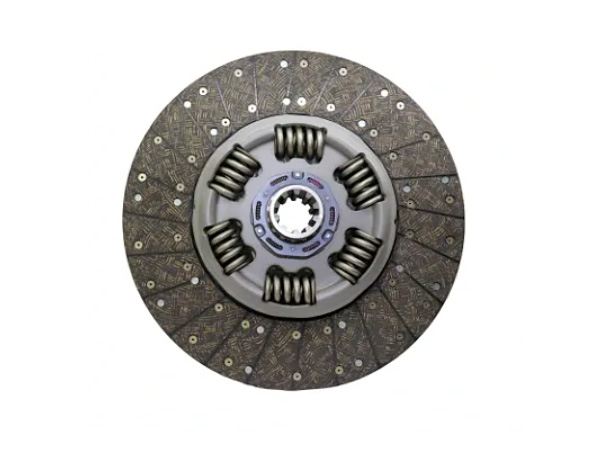
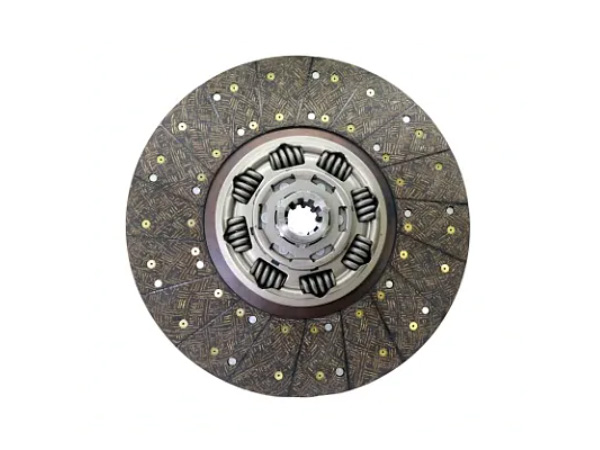
The clutch disc is the component that actually transmits power from the engine to the transmission. It is sandwiched between the engine flywheel and the pressure plate, and its friction surfaces engage and disengage on command from the driver's clutch pedal. Every time the clutch is pressed and released, the disc experiences extreme temperature spikes, shear forces, and slip conditions that gradually wear the friction material.
A properly selected clutch disc must balance three competing requirements: it must have enough friction coefficient to transmit the engine's torque without slip, it must dissipate heat effectively during engagement, and it must engage smoothly enough to prevent driveline shudder. Getting any of these wrong leads to either premature wear, poor drivability, or outright failure.
Matching the Disc to the Vehicle: Size and Spline Specifications
The first and most fundamental specification is physical size. Clutch disc diameters are measured in millimeters and typically range from 160mm for small passenger vehicles to over 430mm for heavy duty trucks. Installing a disc that is even slightly different from the correct diameter will prevent proper engagement and can damage the pressure plate and flywheel.
Equally important is the input shaft spline count and pitch. The disc must slide freely on the transmission input shaft, but with no excessive play. A disc with the wrong spline specification will either not fit at all or will rattle excessively during operation, causing accelerated wear and noise.
Always verify the diameter, spline count, and input shaft diameter against the original part number or vehicle specifications before purchasing. Cross-referencing multiple sources — including the vehicle manufacturer's parts catalog and the supplier's application guide — is strongly recommended.
Torque Capacity and Clutch Rating
Every clutch disc has a rated torque capacity that indicates the maximum engine torque it can transmit without slipping. The torque capacity must exceed the engine's maximum torque output by a comfortable safety margin. For most passenger vehicle applications, a minimum 20–30% margin above peak engine torque is considered appropriate. For heavy duty commercial applications, margins of 40–50% are common.
Under-rating a clutch disc — using one with insufficient torque capacity for the application — is one of the most common causes of premature clutch failure. This is particularly tempting in the aftermarket, where heavier-duty clutches are often more expensive. The false economy of saving money on a lighter-duty disc almost always results in a faster failure and higher total repair cost.
Friction Material Type: Organic, Ceramic, and Semi-Metallic
The friction material bonded to the steel core of the clutch disc has a major impact on its performance characteristics. Three main types are available:
Organic (ceramic-free): Made from fibers — typically glass, carbon, or aramid — bonded with phenolic resin. Organic discs offer smooth engagement, quiet operation, and good heat dissipation. They are the standard choice for passenger vehicles and moderate-duty applications.
Ceramic: Incorporate ceramic fibers in the friction material. They provide higher friction coefficients and better resistance to fade at high temperatures, but can produce harder engagement and increased wear on the flywheel and pressure plate.
Semi-metallic: Contain metallic particles (steel, copper, iron) in the friction compound. They offer excellent heat dissipation and durability for heavy duty applications but tend to be noisier and may cause more flywheel wear than organic options.
Single-Plate vs Multi-Plate Configurations
Most passenger vehicles use a single-plate clutch design with one disc between the flywheel and pressure plate. Heavy duty commercial vehicles and some high-performance applications use multi-plate configurations that stack multiple discs to achieve higher torque capacity within a given envelope.
If your vehicle uses a multi-plate clutch from the factory, replacing it with a single-plate design is not a safe or practical alternative. Always match the original configuration when selecting replacement parts.
Working with a Qualified Clutch Disc Supplier
A reputable clutch disc supplier should provide detailed application data for every part they sell, including the specific vehicle models, engine variants, and usage conditions each disc is designed for. Be cautious of suppliers who offer vague cross-references without application-specific information.
Look for suppliers who can support both OEM standard replacements and heavier-duty options for modified or commercial vehicles. The ability to provide custom-engineered discs for specialized applications is a valuable indicator of manufacturing competence and technical depth.
Conclusion
Regular inspection and maintenance of leaf spring assemblies is a straightforward but often neglected aspect of vehicle upkeep. A systematic inspection routine, combined with timely replacement of worn components, keeps commercial vehicles safe, stable, and on the road.
References
Society of Automotive Engineers. (2020). SAE J2676: Service Maintenance Interval for Commercial Vehicles. SAE International, Warrendale, PA.
Federal Motor Carrier Safety Administration. (2019). Commercial Motor Vehicle Inspection Requirements. U.S. Department of Transportation.
Limpert, R. (1999). Motor Vehicle Inspection. SAE International. Chapter 8: Suspension System Inspection.
Erjavec, J. (2018). Automotive Technology: A Systems Approach (6th ed.). Cengage Learning, Boston, MA.