Current Location:
What damage will worn leaf spring cause to suspension?
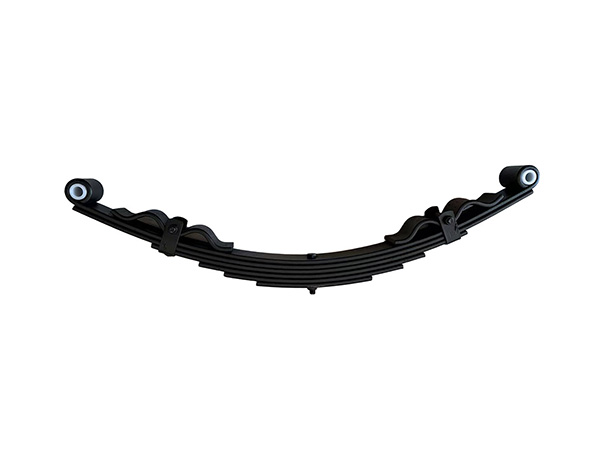
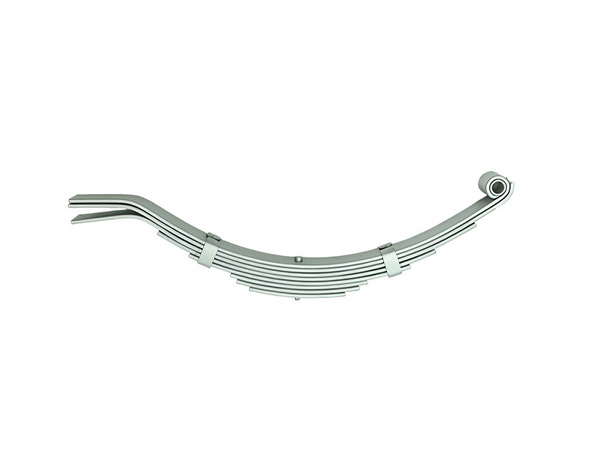
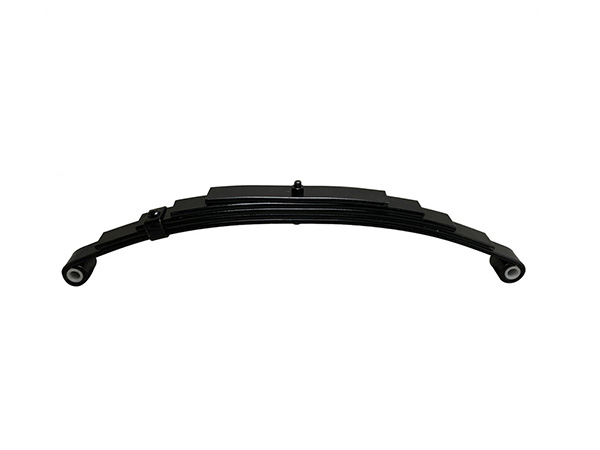
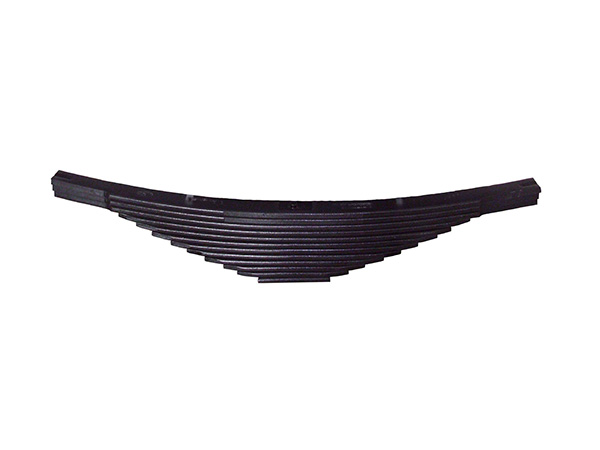
2026-06-16Leaf spring wear includes inter-leaf thinning, arch sagging, surface corrosion, cracked spring eyes and deformed lugs. As the core load-bearing component of the suspension system, a worn leaf spring cannot maintain original elastic stiffness and structural stability. It transfers abnormal impact force and unbalanced load to all matched suspension parts, triggering a chain of secondary damage to bushings, shackles, balance beams, U-bolts, shock absorbers, axles and frame brackets. The specific cascading damages to the whole suspension system are elaborated below.
First, accelerated aging and failure of rubber bushings and shackle assemblies. Worn leaf springs produce excessive lateral sliding and irregular swing during compression and rebound. The repeated lateral shear force acts directly on the rubber bushings inside spring eyes and shackle holes. Normal bushings rely on uniform vertical compression; extra side friction quickly hardens, cracks or tears the rubber buffer layer. Once bushings lose cushioning effect, metal-to-metal collision occurs between spring lugs and pins, further abrading the inner wall of spring eyes and bending shackle plates. Severe wear even breaks shackles, leading to suspension disconnection risk during driving.
Second, premature failure of shock absorbers. Shock absorbers are calibrated to match the original stiffness of intact leaf springs. Worn springs suffer permanent sagging and weakened elasticity, which greatly increases suspension bouncing frequency and stroke. Shock absorbers need to work continuously to suppress excessive vibration, resulting in overheating of internal oil, damaged piston seals and oil leakage. Failed shock absorbers lose damping capacity, making vehicle body bounce violently on rough roads, which in turn accelerates further abrasion of the already worn leaf springs and forms a vicious cycle of mutual damage.
Third, deformation, loosening and fracture of U-bolts and spring seats. Uniform load distribution disappears when leaf springs thin unevenly or sag asymmetrically. Local concentrated stress squeezes the contact area between springs and U-bolts. Long-term uneven extrusion causes U-bolts to stretch, thread slipping and loosening. Without reliable clamping force, the spring stack shifts horizontally, scraping the surface of spring seats and axle supports. In mining and overloading scenarios, severely worn springs may crack U-bolts completely, separating the spring assembly from the axle and causing axle displacement.
Fourth, bending and fatigue damage to bogie balance beams and axle housings. For 6×4 tractors and tri-axle semi-trailers with balanced suspension, left-right asymmetric wear of leaf springs creates uneven load sharing between dual axles. One axle bears far more weight than the design standard, generating abnormal torque on the balance beam. Gradually, the balance beam bends, and its connecting pins wear out rapidly. Meanwhile, unbalanced vertical force produces bending stress on axle housings, leading to axle deformation, abnormal wheel alignment and permanent eccentric tire wear. In extreme cases, fatigue cracks appear on the axle tube.
Fifth, collision abrasion and crack initiation on frame brackets and limit blocks. Worn leaf springs lose original arch height and rigidity, so they compress excessively under full load and bump impact. The top surface of main leaves continuously strikes the metal frame limit blocks. Repeated rigid impact scratches the spring surface and creates stress concentration points that evolve into cracks. At the same time, the frame’s spring mounting brackets bear irregular lateral impact force, causing welding seam cracking and bracket deformation over long-term operation, which greatly weakens chassis structural safety.
Sixth, overall suspension handling degradation and additional hidden hazards. Worn leaf springs disrupt the factory-designed suspension geometry. The chassis height differs obviously between left and right sides, wheel camber and toe parameters deviate seriously, and vehicle stability declines sharply during high-speed driving and sharp turning. Uneven load on suspension components amplifies vibration transmission to the whole chassis, loosening other chassis fasteners. Slight leaf spring wear only brings abnormal squeaking noise, while advanced wear may trigger suspension collapse, tire blowout or rollover accidents under heavy load.
Seventh, aggravated inter-leaf wear and complete spring fracture. This is the most direct deterioration of the spring itself. Thinned leaf plates and rust pits from long-term wear become crack sources. Every bump and braking expands microcracks on the steel surface. Without timely replacement, the main leaf or spring eye will break suddenly, fully paralyzing the suspension system.
To sum up, worn leaf springs do not only damage themselves, but deliver unbalanced impact and shear force to every matching suspension part, including bushings, shackles, shock absorbers, U-bolts, balance beams, axles and frame brackets. Early inspection and replacement of excessively worn leaf springs can avoid costly large-scale suspension component damage and eliminate driving safety risks fundamentally.
1. APA 7th Edition
Zhang, L. (2026). Chain damage analysis of vehicle suspension system induced by worn leaf springs. Heavy-Duty Chassis Reliability Research, 2(1), 137–144.
2. MLA 9th Edition
Zhang, Lei. "Chain Damage Analysis of Vehicle Suspension System Induced by Worn Leaf Springs." Heavy-Duty Chassis Reliability Research, vol. 2, no. 1, 2026, pp. 137–144.
3. GBT 7714-2015
Zhang Lei. Analysis of chain damage of vehicle suspension caused by leaf spring wear [J]. Reliability research of heavy-duty chassis, 2026, 2 (1): 137-144.