Current Location:
How to inspect leaf spring wear regularly?
2026-06-16Regular inspection of leaf spring wear is a necessary daily maintenance step for heavy trucks, tractors and semi-trailers. Systematic periodic checks can detect hidden wear, sagging, cracks and corrosion at an early stage, avoid chain suspension damage and sudden spring fracture on the road. Inspection can be divided into pre-driving visual quick inspection (daily), ground detailed inspection (every 5,000–10,000 km) and lifting full disassembly inspection (every 30,000–50,000 km), with standardized checking items and judgment criteria as follows.
1. Daily pre-driving visual quick inspection (empty vehicle, flat ground)
This routine check takes only 3–5 minutes before each departure, used to find obvious abnormal wear signs rapidly.
Check chassis height symmetry: Walk around the vehicle and compare the ground clearance of left and right frame sides above each axle. If one side is visibly lower, it means unilateral spring sagging and internal fatigue wear.
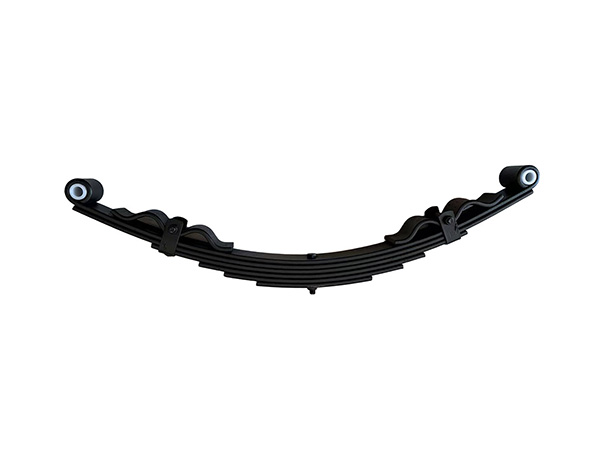
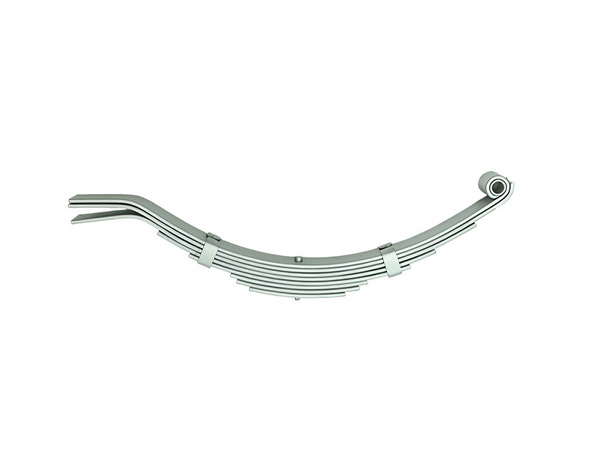
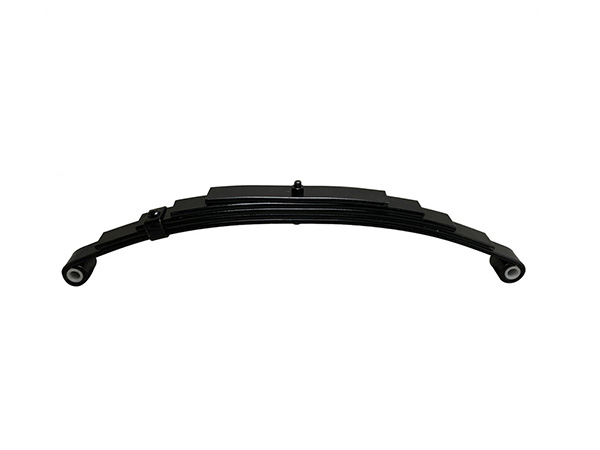
Surface visual scan of spring assembly: Observe all leaf plates from the side to check for obvious thinning, rust pits, surface peeling anti-rust paint and missing leaf fragments.
Listen for abnormal noise: Shake the vehicle body up and down manually or step hard on the chassis side. Squeaking or creaking sound indicates dry inter-leaf friction, worn bushings or missing anti-wear gaskets.
Simple check of external accessories: Check whether U-bolts are loose, shackles are deformed or bent, and rubber limit blocks above springs are worn thin or fallen off.
2. Detailed ground inspection every 5,000–10,000 km
No vehicle lifting equipment required; use a flashlight to observe gaps between leaves and mounting positions.
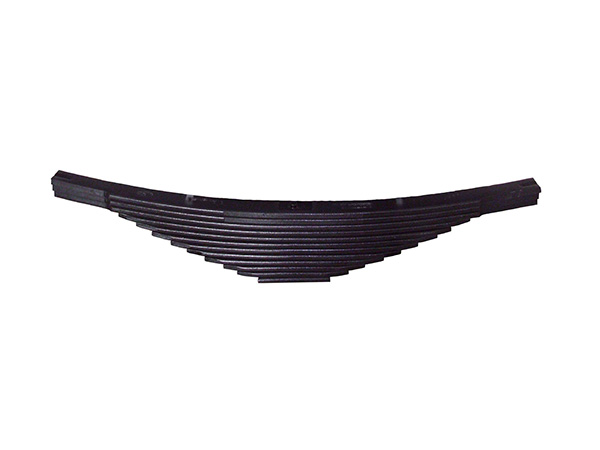
Inter-leaf wear inspection: Shine light into gaps between stacked steel plates. If metal powder, black abrasive debris accumulates heavily between layers, the anti-wear gaskets are damaged and severe inter-leaf abrasion exists.
Corrosion wear judgment: Check spring eyes, main leaf surface and leaf ends. Dense rust pits with recessed surfaces represent corrosive wear; shallow scattered rust spots are minor and can be treated with anti-rust coating.
Lug and eye wear detection: Focus on the root of spring eyes and main leaf lugs, the highest stress positions. Look for tiny linear cracks, edge thinning or uneven abrasion caused by friction with shackle pins.
Arch wear measurement reference: Compare the actual arch curve with the new spring standard shape. If the spring is nearly flat after full unloading, irreversible plastic wear deformation occurs.
Bushing wear check: Observe gaps between spring eye inner wall and metal pins. If the clearance exceeds 3 mm, rubber bushings are worn out and lose buffering function.
3. Full lifting disassembly inspection every 30,000–50,000 km (most accurate wear evaluation)
Lift the vehicle to fully unload suspension force, remove U-bolts and disassemble the whole leaf spring pack one by one for thorough wear measurement.
Thickness measurement of each leaf: Use a vernier caliper to measure the thickness of main leaf and auxiliary leaves at the middle and both ends. If thickness loss exceeds 10% of the original factory standard thickness, the leaf reaches the wear limit and needs replacement.
Full crack screening: Clean all rust and lubricant off leaf surfaces, then inspect every steel plate under strong light. Tiny hairline cracks, penetrating cracks and edge fatigue cracks are all critical wear failures.
Anti-wear gasket inspection: Take out gaskets between leaves; replace all cracked, broken, hardened or missing gaskets to stop accelerated metal friction wear.
Flatness and arch recovery test: Lay disassembled springs on flat ground. If they cannot restore original free arch height without load, metal fatigue wear has accumulated irreversibly.
Mounting accessory wear measurement: Check shackle plate thickness, pin outer diameter and spring seat contact surface. Abnormal thinning or groove abrasion on matching parts means secondary wear caused by worn leaf springs.
Lubrication and anti-rust maintenance after inspection: Clean all abrasive dust and rust, coat high-temperature lubricant between leaves and spray anti-corrosive paint before reassembly.
4. Special enhanced inspection rules for harsh working conditions
Mining, sandstone and mountain transport vehicles: Shorten all inspection cycles by half; conduct full disassembly inspection every 15,000–20,000 km due to fast wear speed.
Vehicles operating in coastal or cold areas with road deicing salt: Increase rust corrosion inspection frequency; clean and recoat anti-rust paint every month.
Long-term overloaded fleets: Add chassis height check every day and measure spring thickness every 3,000 km to prevent premature sagging wear.
5. Standard wear replacement threshold
Replace single leaf or the entire spring assembly immediately when any of the following wear conditions appear:
Leaf thickness wear loss over 10%;
Visible cracks on main leaf, spring eye or more than two auxiliary leaves;
Severe rust pitting covering more than 30% of spring surface;
Permanent sagging with obvious left-right chassis height difference over 20 mm;
Complete failure of all inter-leaf anti-wear gaskets accompanied by heavy metal abrasive powder.
In summary, regular leaf spring wear inspection forms a three-level system of daily visual check, medium-cycle ground detailed observation and long-cycle lifting disassembly measurement. Grasping wear judgment standards and adjusting inspection frequency according to road and load conditions can effectively monitor spring aging abrasion, eliminate suspension hidden dangers in advance and cut overall fleet maintenance costs.
1. APA 7th Edition
Zhang, L. (2026). Standardized periodic inspection procedure and wear judgment criteria for heavy-duty vehicle leaf springs. Vehicle Chassis Daily Maintenance Technology, 2(1), 145–152.
2. MLA 9th Edition
Zhang, Lei. "Standardized Periodic Inspection Procedure and Wear Judgment Criteria for Heavy-Duty Vehicle Leaf Springs." Vehicle Chassis Daily Maintenance Technology, vol. 2, no. 1, 2026, pp. 145–152.
3. GBT 7714-2015
Zhang Lei. Standardized periodic inspection process and wear judgment standard of leaf springs for heavy vehicles [J]. Daily maintenance technology of vehicle chassis, 2026, 2 (1): 145-152.