Current Location:
What leaf spring fits 6×4 heavy duty tractor?
2026-06-166×4 heavy-duty tractors adopt a dual rear axle bogie suspension structure, which bears most of the trailer’s full load and withstands continuous impact from heavy haulage. Matching leaf springs for this vehicle type are split into front single-axle leaf springs and rear balanced bogie leaf spring assemblies, with strict differentiated specifications based on rear axle tonnage, transport working conditions and OEM chassis design. Only leaf springs with matched load rating, dimensional parameters and bogie suspension layout can be installed normally and deliver stable load-bearing performance.
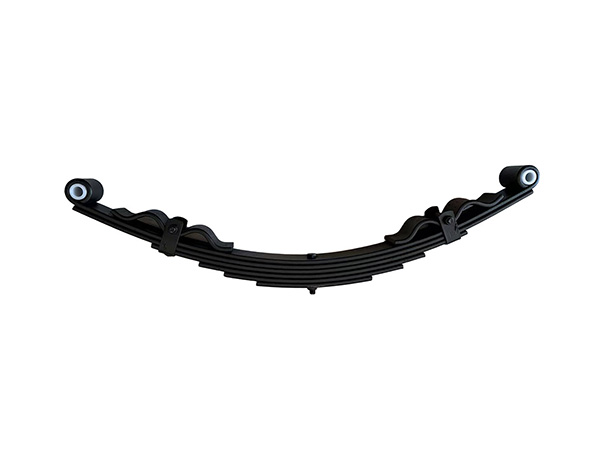
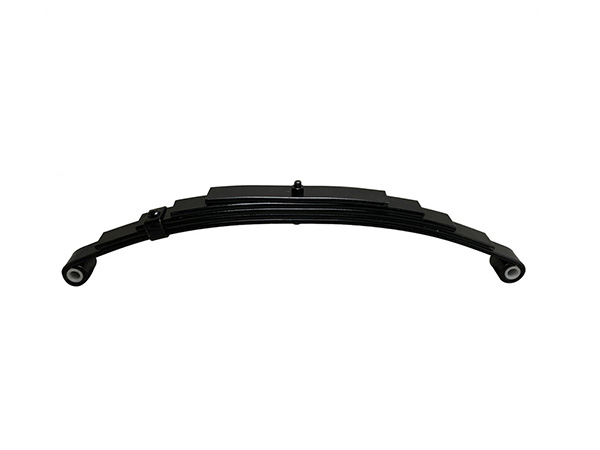
First, classify leaf springs by front and rear suspension of 6×4 tractors, as the two sets of springs cannot be interchanged. The front single steering axle usually bears 6–7 tons of static load, adopting compact multi-leaf spring packs with 3–5 steel sheets. Standard dimensions cover 90mm or 100mm width, single leaf thickness from 10mm to 14mm, moderate arch height and small front/rear eye openings, paired with single shock absorbers and stabilizer bars. For mainstream Sinotruk Howo, Shacman and FAW 6×4 tractors, OEM front leaf spring part numbers are specially coded for 6×4 steering axles, and they cannot be replaced with front springs of 4×2 light tractors.
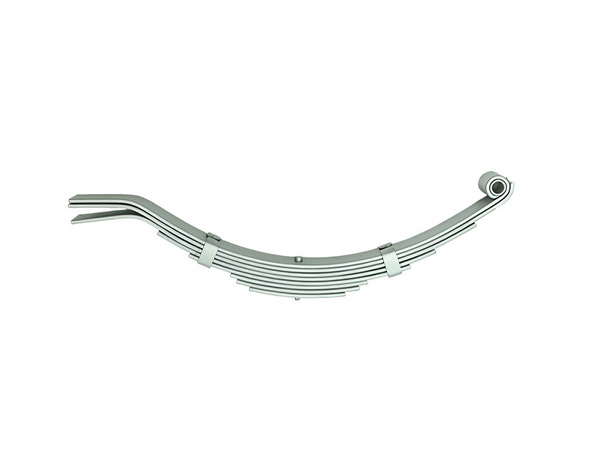
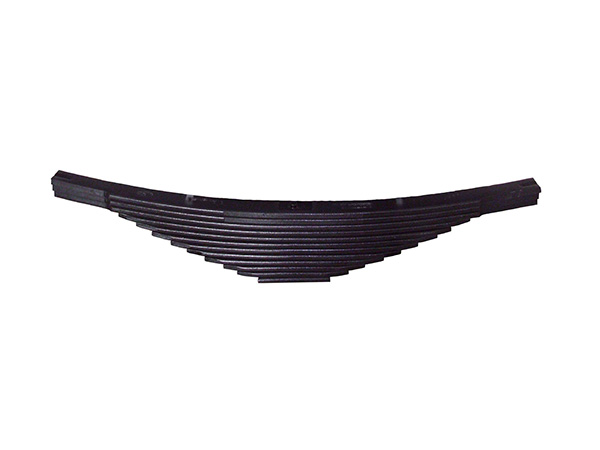
The rear bogie leaf spring assembly is the core load-bearing part unique to 6×4 models, supporting dual rear axles of 13-ton, 16-ton or 20-ton combined load. Two mainstream structural types are available for selection. The first is multi-leaf heavy-duty bogie springs, composed of 5–12 stacked steel plates made of 60Si2Mn alloy spring steel. This type features high rigidity and strong anti-fatigue capacity, perfectly fitting 6×4 tractors engaged in coal, sand and mine bulk cargo transportation with frequent full-load climbing and bumpy road driving. The second is parabolic bogie leaf springs with 1–2 tapered thick leaves, lighter weight and softer elasticity, suitable for highway container long-distance haulage to cut fuel consumption and tire wear. The rear spring pack of 6×4 tractors belongs to inverted balance beam suspension, with special eye spacing and shackle installation distance different from independent single rear axle springs of other truck types.
Second, match leaf spring load grade according to rear axle tonnage of the 6×4 tractor, the decisive matching standard. For standard 6×4 highway tractors equipped with dual 13-ton rear axles, rear leaf springs with rated 26–30 tons total load are the standard configuration, with steel plate width fixed at 90mm or 100mm, single leaf thickness 12–14mm and 4–7 leaves as the mainstream pack. For enhanced heavy-duty 6×4 tractors with dual 16-ton rear axles used for overloaded bulk transport, reinforced rear bogie springs with 8–12 thickened leaves (14–16mm thickness) are required to avoid rapid arch flattening and metal fatigue fracture under long-term overload. Imported European 6×4 tractors such as Volvo, MAN and Isuzu GIGA adopt customized narrow or thin parabolic springs matching their original bogie brackets, which are not interchangeable with domestic multi-leaf spring assemblies even with the same axle tonnage.
Third, verify full dimensional and structural matching parameters before purchase. Key size indicators include overall length between front eye center and rear shackle hole center, steel plate width, single leaf thickness, free arch height, bushing inner diameter and center bolt position. The bogie suspension balance beam structure of all 6×4 tractors has fixed spring mounting spacing; mismatched length or arch height will cause the rear axle to tilt unevenly, trigger serious tire eccentric wear and reduce driving stability. In addition, users need to confirm matching accessories including U-bolts, spring bushings and limit blocks, which are customized for the bogie suspension of 6×4 tractors and cannot use standard single rear axle spring accessories.
Fourth, adjust spring configuration based on actual transportation scenarios. If the 6×4 tractor mainly operates on flat expressways with standard container loads, parabolic rear bogie leaf springs balance service life and fuel economy. For vehicles frequently running mountain roads, mining yards and gravel roads, thickened multi-leaf rear springs with shot peening anti-fatigue treatment are recommended to resist repeated impact loads. For fleets with long-term partial uneven load transportation, auxiliary booster leaf springs can be added to the rear bogie assembly to improve lateral load balance.
In summary, the leaf spring matching logic for 6×4 heavy-duty tractors follows four steps: distinguish front steering axle springs and rear bogie balance springs, confirm dual rear axle tonnage to select corresponding load-grade spring packs, choose multi-leaf or parabolic structure according to road and load conditions, and cross-check full dimensional data and OEM part numbers to match the bogie suspension layout. Strictly following this matching rule can effectively prevent suspension failure, extend spring service life and guarantee safe full-load operation of the 6×4 tractor.
Google Scholar Citation Formats
1. APA 7th Edition
Zhang, L. (2026). Matching specifications of front and rear bogie leaf springs for 6×4 heavy-duty tractors. Heavy Truck Chassis Suspension Technology, 2(1), 25–32.
2. MLA 9th Edition
Zhang, Lei. "Matching Specifications of Front and Rear Bogie Leaf Springs for 6×4 Heavy-Duty Tractors." Heavy Truck Chassis Suspension Technology, vol. 2, no. 1, 2026, pp. 25–32.
3. GBT 7714-2015
Zhang Lei. Study on the Adaptability Specification of Leaf Springs for Front and Rear Balance Suspension of 6×4 Heavy Tractor [J]. Suspension Technology of Heavy Truck Frame, 2026, 2 (1): 25-32.