Current Location:
Custom Leaf Spring Manufacturing: OEM and ODM Explained
2026-09-18Most people think of leaf springs as catalog parts, but a large share of the world's supply is built to order. Equipment manufacturers, restoration specialists, and distributors serving niche vehicle platforms all depend on factories that can take a drawing or a worn sample and turn it into a consistent, reliable spring. Understanding how that process works helps buyers specify better and avoid expensive surprises.
What OEM and ODM Mean in Suspension Parts
OEM, or original equipment manufacturer, supply means producing springs to a vehicle maker's exact specification, often under that maker's part number, to the same standard used on the assembly line. ODM, or original design manufacturer, goes a step further: the factory contributes the design and engineering, delivering a finished component that the buyer brands and sells. Both models rely on the same disciplined production process; the difference is who owns the design input.
For a buyer, the practical question is whether you need a clone of an existing part or a new design for a product you are building. Either way, the factory's engineering capability — not just its press capacity — is what determines the result.
The Manufacturing Workflow
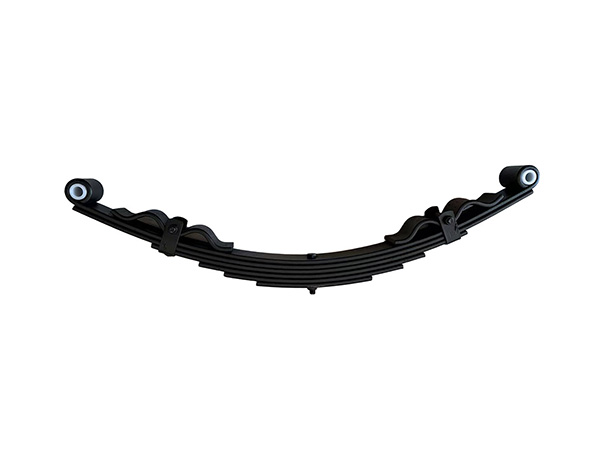
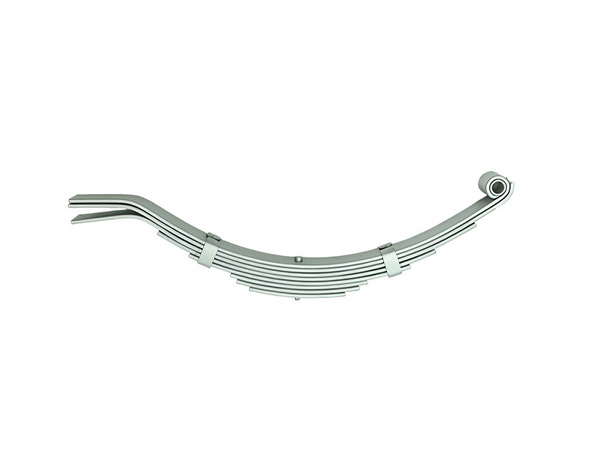
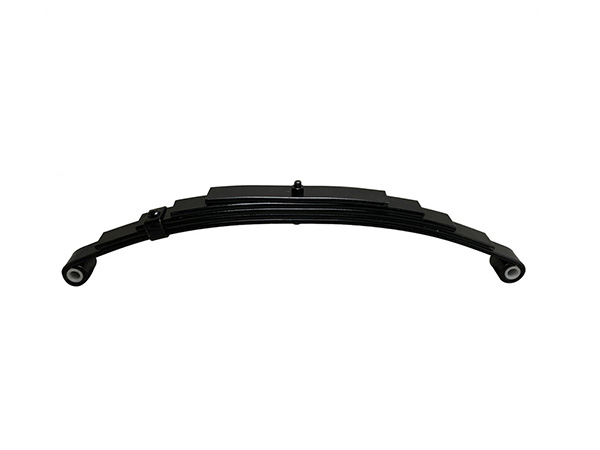
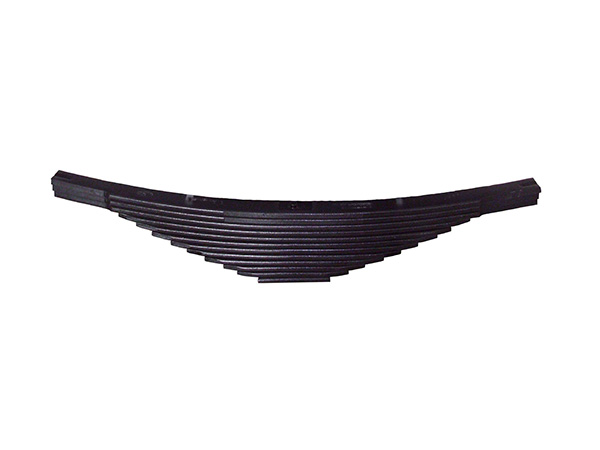
A steel leaf spring begins as rolled spring steel strip or bar, cut to length and heated to a forging temperature so it can be shaped into the required camber. The leaves are then shot-peened — bombarded with small steel shot — to introduce compressive stress at the surface, which dramatically improves fatigue resistance. Heat treatment follows, typically oil quenching and tempering or austempering, to reach the target hardness.
After heat treatment the leaves are assembled with center bolts and rebound clips, eyes are formed (or bushed), and the finished pack is inspected for arch, length, and rate. The whole sequence is controlled by process parameters rather than by hand fitting, which is what lets a factory repeat the same spring across thousands of units.
Material Sourcing and Quality Control
The quality of a spring starts with certified steel. Reputable manufacturers require mill certificates confirming the grade and chemistry, and they verify incoming material rather than trusting paperwork alone. In-process checks track hardness, camber, and leaf thickness; final inspection confirms the spring rate and dimensions against the drawing.
Quality systems such as ISO 9001 or IATF 16949 are a useful signal, though for many distributors the proof is in batch consistency — every order should match the first validated sample, not just the prototype.
Prototyping from Drawings or Samples
The most common starting points are a technical drawing or a physical sample. A drawing lets the factory quote directly against specified dimensions and rate; a sample is reverse-engineered by measuring each leaf, arch, and eye, then confirming the rate on a test rig. Either route should end with a first-article inspection report before production volume is committed.
For obsolete or modified vehicles, this capability is the difference between a working restoration and a compromise. A factory that handles both drawings and samples covers the full range of buyer needs.
Batch Consistency for Global Buyers
A distributor shipping to multiple markets cannot absorb springs that vary part to part. Batch consistency depends on locked process parameters, calibrated tooling, and traceability so any deviation can be traced to a specific production lot. Buyers should ask how a supplier maintains consistency across large orders and what documentation accompanies each shipment.
Choosing a Manufacturing Partner
Beyond price, evaluate a factory on engineering support, certification, sample-to-production discipline, and communication. A partner that can advise on material grade, propose a rate for a new application, and stand behind batch quality reduces risk far more than the lowest quote. For global supply, the ability to handle OEM and ODM work and to scale from prototype to volume is what separates a supplier from a mere trader.
Closing Thoughts
Custom leaf spring manufacturing is equal parts metallurgy, process control, and engineering judgment. Buyers who understand the workflow — and who choose a factory with real design and quality capability — get springs that fit, perform, and repeat. That consistency is the foundation of any reliable supply relationship.
References
International Organization for Standardization. (2015). ISO 9001: Quality Management Systems — Requirements. ISO, Geneva.
International Automotive Task Force. (2016). IATF 16949: Automotive Quality Management System Standard. IATF.
ASM International. (1991). ASM Handbook, Vol. 4: Heat Treating. ASM International, Materials Park, OH.
SAE International. (2018). SAE J1392: Steel, Bars, Forgings, and Rings for Leaf Springs. SAE International, Warrendale, PA.