Current Location:
Air Suspension vs Leaf Spring: Which Suits Your Fleet Better
2026-09-18Fleet managers facing a spec sheet for new trucks inevitably hit the same fork in the road: air suspension or leaf spring? Both have dominated commercial vehicle suspension for decades, and both have loyal adherents. The honest answer is that neither is universally better — the right choice follows from how the vehicle is used, what it carries, and how much downtime the operation can tolerate.
How Air Suspension Works
An air suspension replaces the steel spring with a reinforced rubber bellows, or airbag, that is inflated by an onboard compressor to a pressure set by the load. Height sensors adjust the air volume so the chassis stays level whether the truck is empty or fully loaded. The effect is a cushioned, self-leveling ride that is particularly kind to fragile cargo and to drivers covering long distances.
The sophistication comes at a cost. Air systems have compressors, valves, lines, sensors, and electronic controls — each a potential failure point that a steel spring simply does not have.
How Leaf Spring Suspension Works
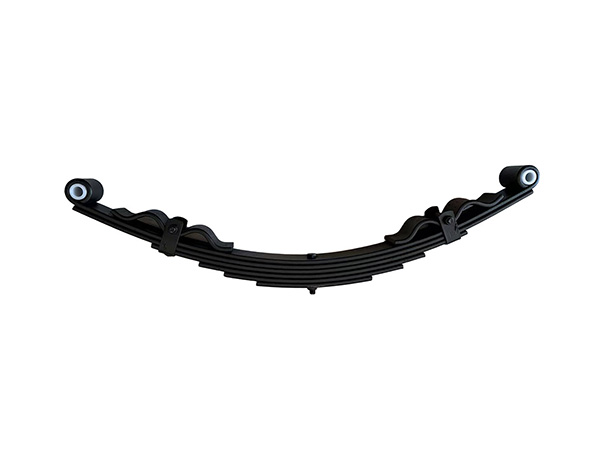
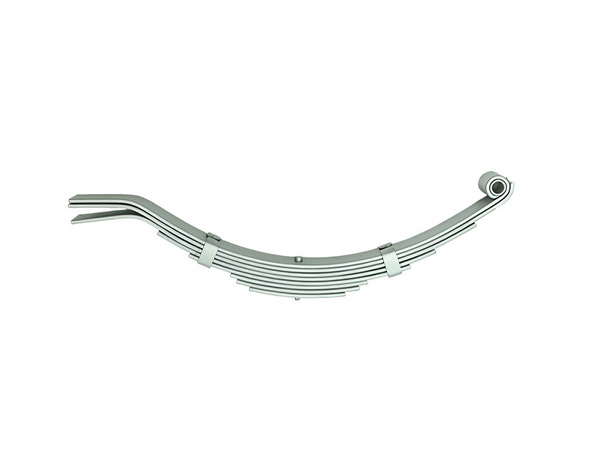
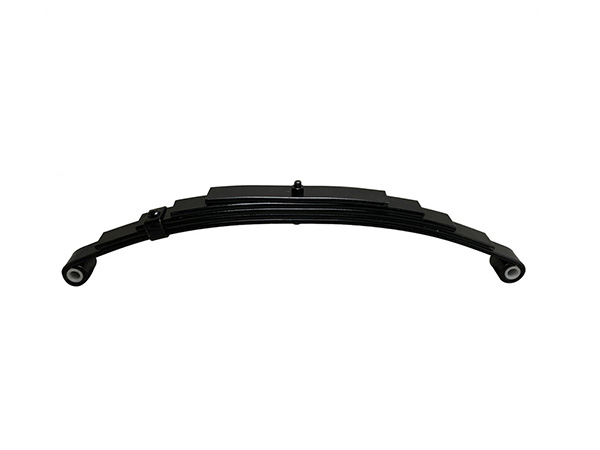
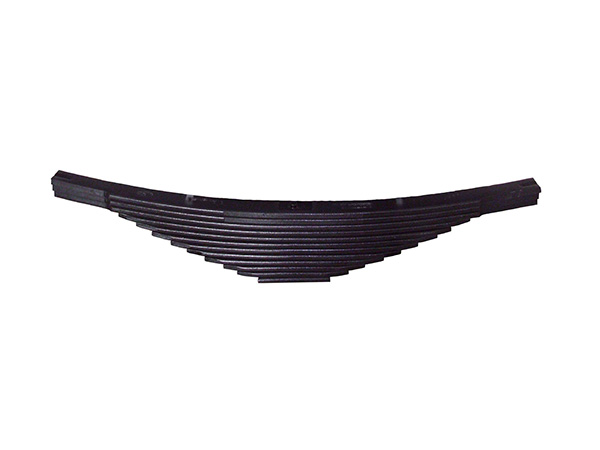
A leaf spring is a stack of curved steel leaves that flex to absorb road input and support the load. There is no compressor, no sensor, no air line. It is a passive mechanical element that, barring fatigue or corrosion, does its job without intervention. This simplicity is the reason leaf springs still equip the majority of heavy duty trucks worldwide.
The trade-off is a fixed spring rate. An empty truck rides on the same spring as a loaded one, so light-load comfort is never as good as an air system that softens when unladen.
Ride Comfort Comparison
For driver comfort on long hauls and protection of delicate freight, air suspension wins clearly. The self-leveling action keeps the body steady over uneven surfaces and reduces the vibration that fatigues drivers. Leaf springs, especially in unladen light trucks, transmit more harshness and can produce a bouncing motion over repeated bumps.
That said, modern progressive-rate and parabolic leaf springs have closed much of the gap for medium-duty use, delivering acceptable comfort without the complexity of air.
Load Capacity and Durability
When the priority is moving maximum weight day after day, leaf springs are the workhorse. They tolerate overload, abuse, and contaminated environments better than airbags, which can be punctured by debris or damaged by extreme cold. In mining, construction, and agricultural service, the robustness of steel leaves is a decisive advantage.
Air suspension excels when loads are variable and within design limits but is less forgiving of chronic overload, which accelerates bellows wear.
Maintenance and Total Cost
Leaf springs are cheap to maintain. Inspection is visual, replacement is straightforward, and there are few parts to fail. Air systems need periodic checks of air lines, dryer units, and bellows condition, and a single failed compressor can ground a vehicle.
Over a vehicle's life, the lower maintenance burden of leaf springs often makes them the lower total-cost option, even when air suspension's fuel and tire savings are factored in for certain operations.
Best Use Cases for Each
Choose air suspension for long-haul tractors, refrigerated and fragile cargo, and operations where driver retention and cargo protection justify the higher upfront and maintenance cost. Choose leaf springs for dump trucks, mixers, agricultural and off-road equipment, and any application where simplicity, overload tolerance, and low cost dominate the decision.
Many fleets run a mixed strategy — air on the tractors, leaves on the trailers and vocational trucks — which captures most of the benefits of both.
Closing Thoughts
The leaf spring is not obsolete next to air ride; it is the rational choice for the majority of demanding commercial work. For buyers specifying new vehicles or replacing worn suspension, the decision should be driven by duty cycle and cost tolerance rather than fashion. A suspension component supplier that stocks both technologies and can advise on application fit is a useful partner when weighing the two.
References
Gillespie, T.D. (1992). Fundamentals of Vehicle Dynamics. SAE International, Warrendale, PA. doi:10.4271/R-114.
Reimpell, J., Stoll, H., & Betzler, J.W. (2001). The Automotive Chassis: Engineering Principles (2nd ed.). Butterworth-Heinemann, Oxford.
American Trucking Associations. (2021). Technology & Maintenance Council Recommended Practices for Suspension Systems. ATA, Arlington, VA.
Crolla, D. (2009). Automotive Engineering: Powertrain, Chassis and Body. Butterworth-Heinemann, Oxford.