Current Location:
Can I replace parabolic leaf spring with multi-leaf spring?
2026-06-16In theory, cross-replacement between parabolic leaf springs and multi-leaf springs is feasible only when all core matching parameters including overall length, width, eye size, arch height, bushing dimension and axle load rating are fully consistent. However, direct blind replacement without comprehensive parameter verification will trigger multiple mechanical defects and hidden safety hazards, as the two spring structures differ fundamentally in rigidity, weight distribution, damping performance and load-bearing logic. Detailed analysis is as follows.
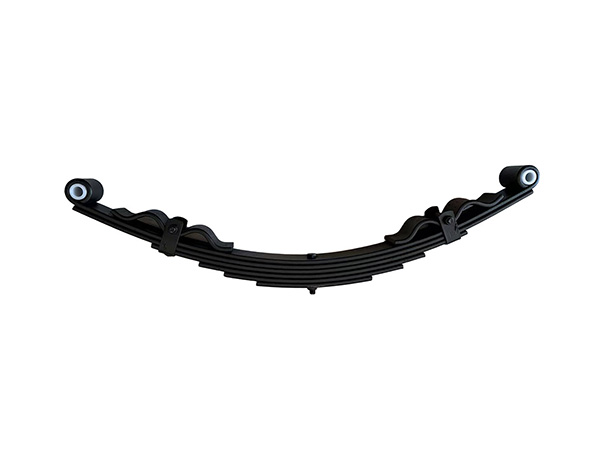
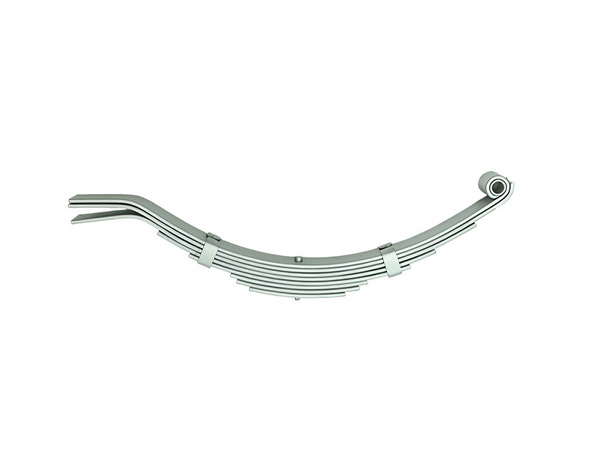
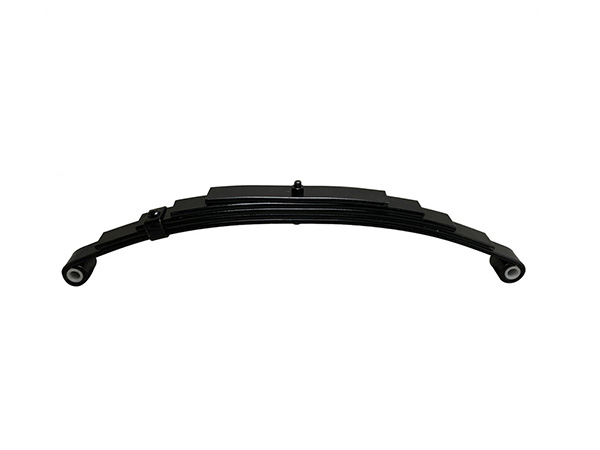
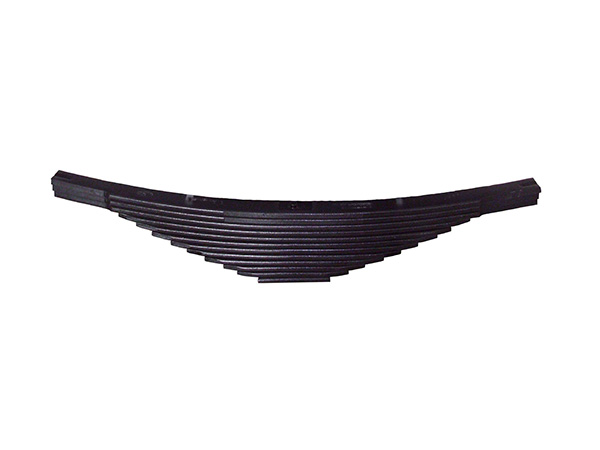
First, major structural and mechanical differences determine the risks of arbitrary replacement. A parabolic leaf spring adopts 1 to 2 tapered thick steel plates with variable cross-section design. Its elastic curve is soft, overall weight is lighter, and stress distribution is uniform, focusing on highway comfort and fuel saving. A standard multi-leaf spring consists of 3 to 7 stacked thin steel sheets. Superimposed steel layers bring high rigidity and strong anti-impact capacity, which are suitable for heavy loads and rough mine roads. If you directly install multi-leaf springs to replace original parabolic springs with unchanged axle tonnage, the suspension rigidity will rise sharply. The vehicle will bounce violently when passing speed bumps or uneven roads, causing severe eccentric tire wear, accelerated damage to shock absorbers and loose chassis fasteners. Conversely, using parabolic springs to replace original multi-leaf heavy-duty springs will lead to insufficient rigidity, continuous chassis sinking under full load, large body roll during turning, and even fatigue fracture of spring steel plates.
Second, dimensional and mounting matching must be strictly unified before replacement. Even if two types of springs fit the same axle tonnage, inconsistent arch height, total length or shackle spacing will cause installation failure or abnormal stress. Original parabolic springs usually have optimized arch height for lightweight chassis layout. After switching to multi-leaf springs with the same load grade, the increased thickness of stacked steel plates may interfere with frame brackets, limit blocks or U-bolt fixing positions. Besides, multi-leaf assemblies are much heavier than parabolic alternatives. The extra suspension weight raises unsprung mass, which destroys the original suspension calibration designed by vehicle manufacturers, worsening handling stability at high speed. The inner diameter of spring eyes, center bolt position and shackle hole spacing must be completely identical to avoid forced assembly that creates hidden cracks on spring lugs.
Third, vehicle operating conditions decide whether replacement is worthy. There are limited applicable scenarios for replacing parabolic springs with multi-leaf springs. If the vehicle originally matched parabolic springs for light container highway transportation, but later shifts to frequent overloaded bulk cargo, mountain climbing or mining yard operation, upgrading to matched multi-leaf springs is a reasonable modification to improve load resistance. For fleets that still run only flat highways with standard rated load, such replacement is not recommended. Excessive rigidity sacrifices driving smoothness, raises fuel consumption and shortens the service life of tires and shock absorbers. For vehicles with original multi-leaf springs, switching to parabolic springs is only suitable if the daily transport load is greatly reduced and road conditions are all smooth expressways.
Fourth, auxiliary supporting parts need synchronous replacement after conversion. After replacing parabolic springs with multi-leaf assemblies, users must check and update matching accessories. Multi-leaf springs require longer U-bolts to wrap thicker stacked steel plates; original short bolts cannot provide enough clamping force and will loosen during driving. Meanwhile, heavy multi-leaf springs generate stronger vibration impact, so shock absorbers, rubber bushings and stabilizer bars should also be upgraded to heavy-duty models to bear increased load. Without synchronous replacement of supporting components, premature wear and abnormal noise will appear on the suspension system soon after modification.
Fifth, safety inspection after replacement is indispensable. After finishing cross-type spring replacement, conduct static inspection first to observe whether the left and right chassis height is balanced and whether springs rub against surrounding brackets. Then carry out a road test including low-speed bumpy sections, full-load straight-line driving and sharp turning to check for abnormal rattling, serious body tilt or tire scraping. If obvious jitter or chassis sinking occurs, it means the stiffness mismatch is too severe, and the multi-leaf springs need to be replaced with load-matched thinner versions or revert to original parabolic springs.
To sum up, you can replace parabolic leaf springs with multi-leaf springs only on the premise of fully consistent dimensional parameters, matched axle load and synchronous upgrade of supporting accessories, and the vehicle’s daily working conditions need higher rigidity and heavy-load resistance. Blind replacement without parameter confirmation will damage the whole suspension system and bring driving safety risks. It is better to select the spring type consistent with the original factory design according to long-term transportation load and road environment.
1. APA 7th Edition
Zhang, L. (2026). Feasibility and risk analysis of interchange between parabolic and multi-leaf leaf springs for commercial vehicles. Heavy-Duty Suspension Engineering, 2(1), 41–48.
2. MLA 9th Edition
Zhang, Lei. "Feasibility and Risk Analysis of Interchange Between Parabolic and Multi-Leaf Leaf Springs for Commercial Vehicles." Heavy-Duty Suspension Engineering, vol. 2, no. 1, 2026, pp. 41–48.
3. GBT 7714-2015
Zhang Lei. Feasibility and risk analysis of interchange between parabolic leaf springs and multi-leaf springs in commercial vehicles [J]. Heavy-duty suspension engineering, 2026, 2 (1): 41-48.