Current Location:
Why leaf spring makes squeaking noise?
2026-06-16Squeaking, creaking or metal rubbing noises from leaf spring assemblies are extremely common faults for trucks and semi-trailers. The abnormal sound mainly arises from friction, clearance gaps, corrosion and component aging between matching parts of the suspension system. Most squeaking sounds get louder when the vehicle passes speed bumps, turns, starts or brakes. The specific root causes are sorted into six categories below.
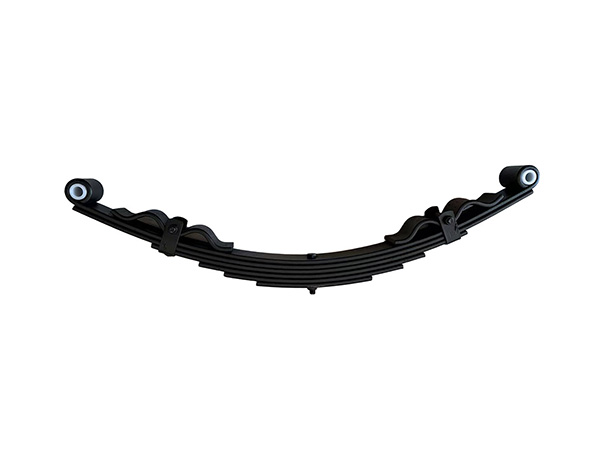
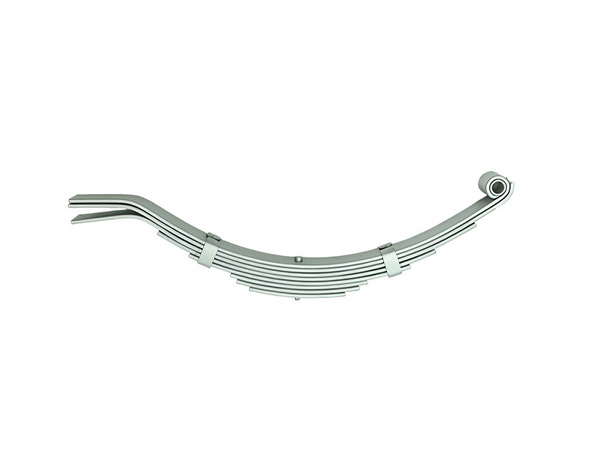
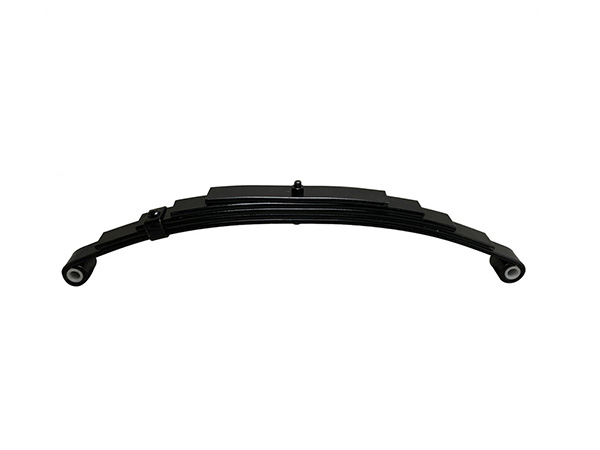
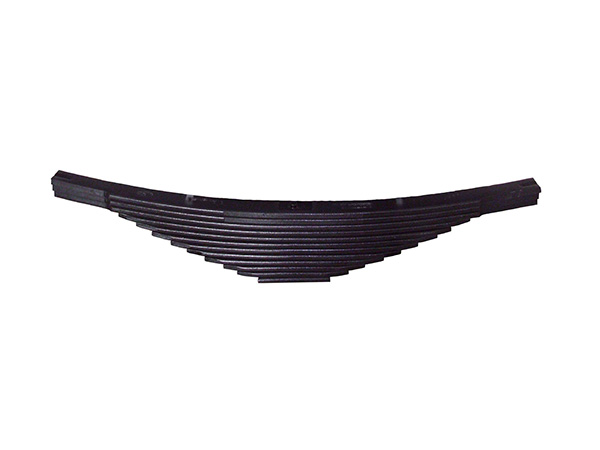
First, lack of lubrication between stacked spring leaves is the most frequent cause. Multi-leaf springs consist of multiple steel plates that slide and rub against each other during compression and rebound. Factory-installed anti-friction grease will gradually wash away by rain, mud and dust after long driving. Without lubricant, dry metal-to-metal contact produces sharp high-pitched squeaks every time the spring deforms. Parabolic leaf springs with only one or two leaves rarely have inter-leaf squeaking, so continuous squeaking usually occurs on multi-leaf heavy-duty vehicles.
Second, wear and aging of rubber bushings at spring eyes and shackles. The bushings serve as buffer sleeves between the spring eye hole and metal pins to isolate hard friction. After long-term vibration, rubber bushings harden, crack or wear thin, creating large gaps between metal parts. When the vehicle bears load or shakes, the pin directly rubs against the spring eye, emitting obvious creaking and squeaking noise. If bushings are completely broken, metal collision noise will also accompany the squeak.
Third, rust and corrosion on contact surfaces. Rainwater, road salt, mine slurry and mud stick to leaf springs for a long time, forming rust layers on leaf surfaces, spring eyes, shackle pins and contact brackets. Rust oxide increases friction resistance greatly. When the spring stretches and compresses, the rusted surfaces grind against each other and create harsh squeaking sounds. Rust pits also lock steel plates together slightly; small sliding movements will trigger abnormal noise continuously.
Fourth, loose U-bolts, deformed shackles and misaligned suspension parts. If U-bolts are not evenly tightened during maintenance, the leaf spring stack shifts horizontally under driving vibration. The steel plates rub against U-bolts, frame brackets and limit blocks to make squeaking noise. Bent shackles or offset spring mounting positions cause abnormal lateral extrusion force on the spring assembly, leading to persistent friction sound even on flat roads.
Fifth, missing or damaged inter-leaf anti-wear gaskets. Many new leaf springs are equipped with plastic or rubber gaskets between each leaf to reduce friction and noise. If these gaskets fall off during driving or are not reinstalled after spring disassembly and maintenance, direct steel-on-steel friction generates loud squeaks. Hardened or cracked gaskets lose their buffering effect and cannot eliminate abnormal noise.
Sixth, foreign debris stuck inside the leaf spring gap. Sand, gravel, small stone fragments and mud get trapped between stacked steel plates after off-road or mine driving. These hard particles act as abrasives when the spring bends and rebounds, producing continuous squeaking and grinding sounds. The noise will temporarily disappear after washing the spring thoroughly but return quickly if debris is not completely cleared.
Simple troubleshooting solutions for squeaking leaf springs
Lift the vehicle and clean mud, rust and gravel between spring leaves thoroughly; spray high-temperature lithium grease or dedicated leaf spring lubricant on all contact surfaces.
Check the wear condition of eye bushings and shackle rubber sleeves; replace all hardened, cracked or missing bushings.
Retighten all U-bolts evenly with a torque wrench to fix spring displacement; straighten deformed shackles or replace them with new ones.
Add new anti-friction gaskets between every layer of leaf springs to isolate metal contact.
Spray anti-rust coating on the whole spring surface to prevent rust accumulation and secondary noise generation.
In summary, leaf spring squeaking noise is mostly induced by dry friction between steel leaves, worn rubber bushings and surface rust. Timely cleaning, lubrication and replacement of aging buffer accessories can effectively eliminate abnormal squeaking sounds and also slow down leaf spring abrasion to extend its overall service life.
1. APA 7th Edition
Zhang, L. (2026). Generation mechanism and elimination method of squeaking abnormal noise from commercial vehicle leaf spring assembly. Automotive NVH Control Technology, 2(1), 121–128.
2. MLA 9th Edition
Zhang, Lei. "Generation Mechanism and Elimination Method of Squeaking Abnormal Noise from Commercial Vehicle Leaf Spring Assembly." Automotive NVH Control Technology, vol. 2, no. 1, 2026, pp. 121–128.
3. GBT 7714-2015
Zhang Lei. Generation mechanism and elimination scheme of abnormal sound of leaf spring assembly of commercial vehicles [J]. Automotive noise and vibration control technology, 2026, 2 (1): 121-128.