Current Location:
Which leaf spring suits mining dump trucks?
2026-06-16Mining dump trucks operate under ultra-severe working conditions: full overloading all day, continuous vibration on rugged gravel and mine roads, frequent steep slope climbing, heavy impact from falling ore, and drastic temperature changes. Ordinary standard leaf springs for highway logistics trailers cannot withstand such harsh loads and will crack or flatten quickly. Only specially reinforced heavy-duty multi-leaf leaf springs manufactured from high-grade alloy spring steel are the ideal match for mining dump trucks, with exclusive structural upgrades, material standards and load parameters tailored to mine operation demands.
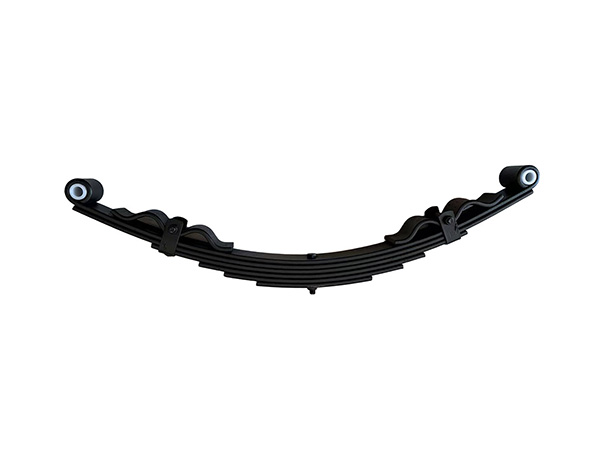
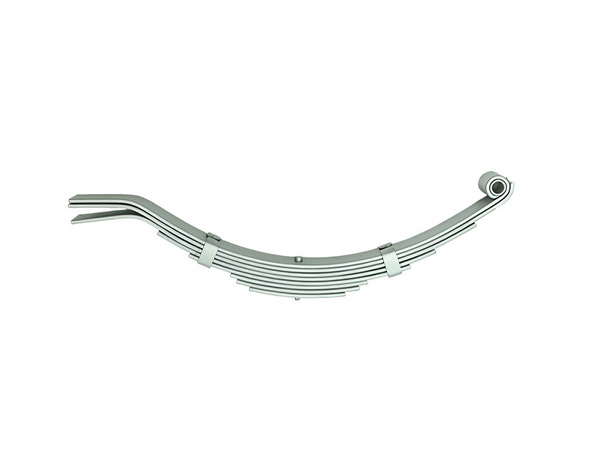
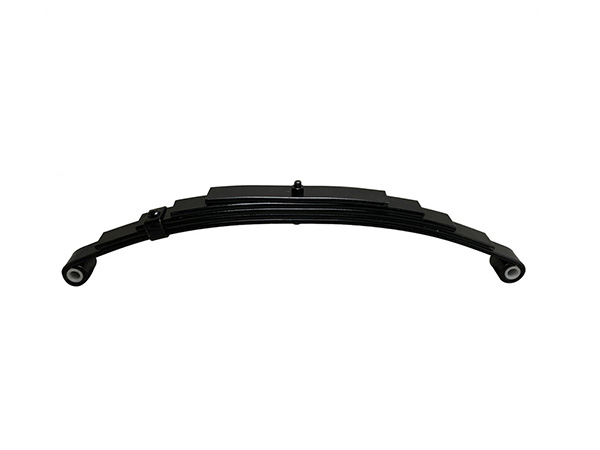
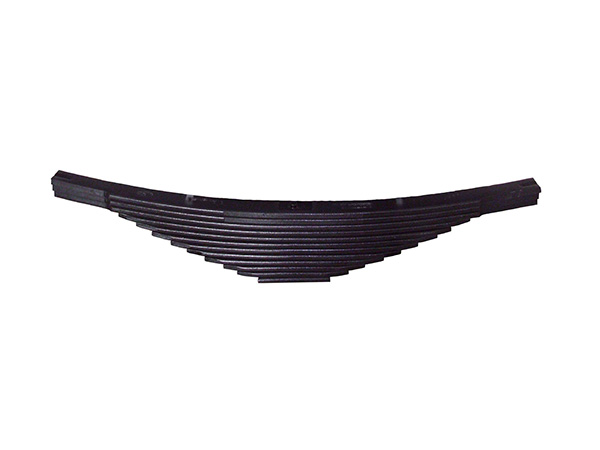
First, structural type: reinforced thick multi-leaf springs are the only viable option, while parabolic springs are not recommended. Mining vehicles bear instantaneous impact loads far exceeding static rated loads. Conventional parabolic springs with one or two tapered plates have limited rigidity and poor anti-impact capacity; long-term mine use will lead to irreversible arch collapse and rapid fatigue fracture. The dedicated mining multi-leaf spring adopts 7 to 12 layers of thickened steel sheets stacked together. More superimposed plates share impact force evenly, disperse concentrated stress and greatly enhance overall structural rigidity. The main leaf and auxiliary leaves are widened and thickened, and the spring eye lugs are forged and reinforced to avoid tearing under violent bumping. Compared with standard 5-leaf trailer springs, mining multi-leaf assemblies have 40% higher anti-fracture performance and stronger resistance to large deformation.
Second, dedicated steel grade for mining service: prioritize 50CrV4 chromium-vanadium alloy spring steel, with 60Si2Mn silicon-manganese steel as the economical alternative for light mining fleets. Mine environments feature repeated friction between leaf layers and sustained high temperature from heavy load bending. 50CrV4 contains chromium and vanadium elements that stabilize metal grain structures, delivering superior high-temperature resistance, impact toughness and fatigue life. Its tensile strength exceeds 1500 MPa, effectively suppressing microcrack expansion caused by constant ore impact. For small and medium mines with moderate haulage intensity, 60Si2Mn springs with complete heat treatment and shot peening can control procurement costs, but they require more frequent maintenance and replacement than 50CrV4 versions. Low-cost carbon steel springs are strictly forbidden for mining dump trucks due to extreme safety risks.
Third, core dimensional and load matching specifications. Mining leaf springs adopt wider and thicker steel plates to boost bearing limits. The mainstream width reaches 100 mm to 120 mm, and single leaf thickness ranges from 14 mm to 16 mm. Each complete spring set carries a rated static load of 18 to 28 tons, compatible with heavy-duty mining axles from 16 tons up to 30 tons. The free arch height is deliberately increased to reserve deformation allowance under overload, preventing the chassis from bottoming out when crossing mine pits and bumps. Meanwhile, manufacturers enlarge the inner diameter of spring eyes and thicken center bolts, as standard thin accessories will snap under heavy mining impact. All surfaces are treated with thick electrostatic anti-rust paint or hot-dip galvanizing to resist corrosion from mine mud, mineral water and dust.
Fourth, essential enhanced production processes exclusive to mining leaf springs. Qualified mining-grade springs must go through full-process strengthening treatment: integral quenching and high-temperature tempering to lock elastic performance, intensive shot peening to form compressive stress layers on steel surfaces, and stress relief annealing to eliminate internal processing stress. Without shot peening, even high-grade 50CrV4 steel will develop surface cracks within short mine operation cycles. Many factories also add inter-leaf wear-resistant plastic gaskets for mining models to reduce metal friction noise and slow down leaf thinning caused by long-term reciprocating extrusion.
Fifth, supporting matching rules during replacement. When replacing leaf springs on mining dump trucks, all relevant suspension accessories must be upgraded synchronously. Standard thin U-bolts need to be replaced with thickened high-strength U-bolts to clamp the multi-layer thick spring stack firmly. Heavy-duty rubber bushings and reinforced shock absorbers designed for impact loads are required to coordinate with the rigid mining spring assembly. Mixing ordinary light-load accessories with mining leaf springs will cause loose fasteners, abnormal suspension noise and accelerated component failure.
In summary, the leaf spring best suited for mining dump trucks is a 7–12 layer reinforced multi-leaf assembly made of 50CrV4 alloy spring steel, with 100–120 mm width, 14–16 mm thick single leaves and a rated load above 18 tons. It features forged reinforced lugs, full heat treatment and shot peening strengthening. Parabolic springs and thin standard logistics springs should never be installed on mining dump trucks, as they cannot resist the extreme impact and overload unique to mine transportation and will lead to sudden suspension failure.
1. APA 7th Edition
Zhang, L. (2026). Structural and material optimization of heavy-duty leaf springs for mining dump trucks. Mining Vehicle Equipment Research, 2(1), 65–72.
2. MLA 9th Edition
Zhang, Lei. "Structural and Material Optimization of Heavy-Duty Leaf Springs for Mining Dump Trucks." Mining Vehicle Equipment Research, vol. 2, no. 1, 2026, pp. 65–72.
3. GBT 7714-2015
Zhang Lei. Study on structure and material optimization of heavy-duty leaf spring of mining dump truck [J]. Research on mining vehicle equipment, 2026, 2 (1): 65-72.