Current Location:
Understanding Multi-Leaf vs Mono-Leaf Spring Designs for Commercial Vehicles
2026-08-14Vehicle suspension design has evolved significantly over the past century, yet leaf springs remain one of the most widely used suspension elements in commercial vehicles around the world. Understanding the differences between multi-leaf and mono-leaf spring designs is essential for engineers, fleet operators, and parts buyers who want to optimize suspension performance for specific applications.
The History and Basic Principle of Leaf Springs
Leaf springs have been used in vehicle suspension since the earliest days of the automobile. Their basic operating principle is straightforward: a series of curved steel strips stacked together flex under load, storing kinetic energy and releasing it as the load decreases. This simple yet effective mechanism has been refined over decades into two dominant configurations: multi-leaf and mono-leaf designs.
The choice between these two configurations is not simply a matter of cost. Each design has distinct mechanical characteristics that make it more suitable for particular vehicle types, load profiles, and driving conditions.
How Multi-Leaf Spring Designs Work
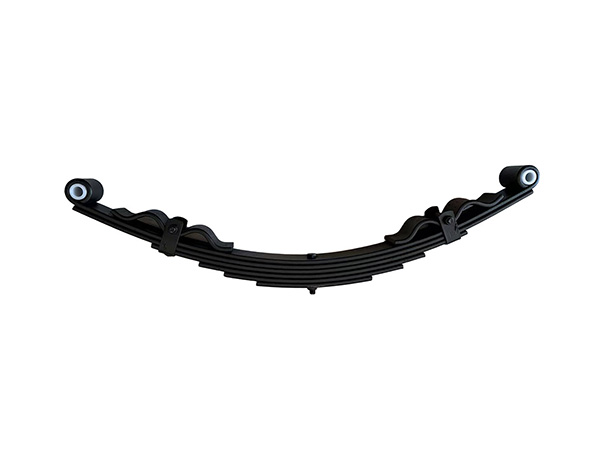
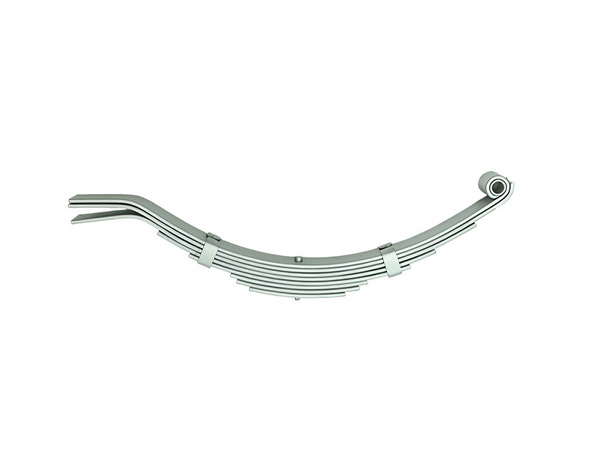
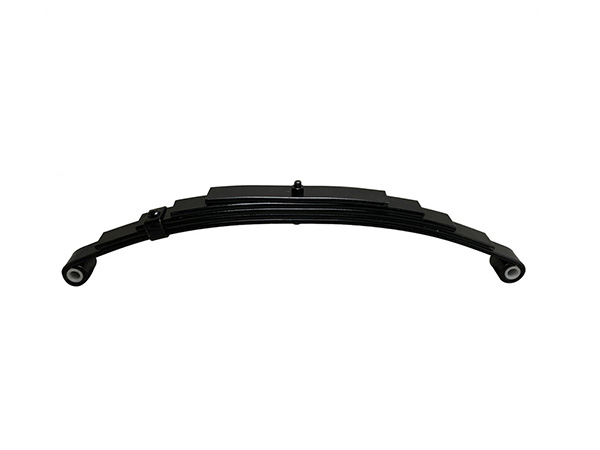
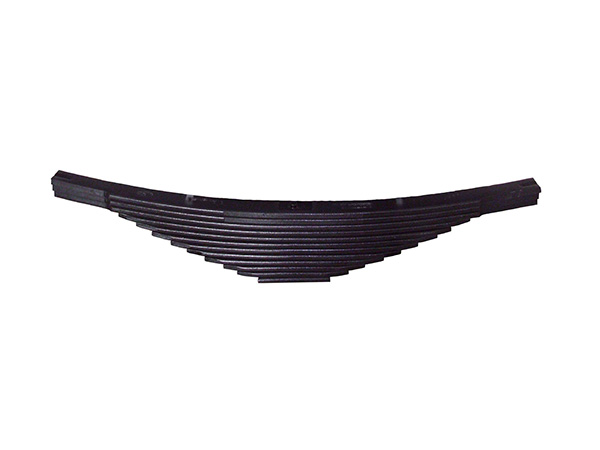
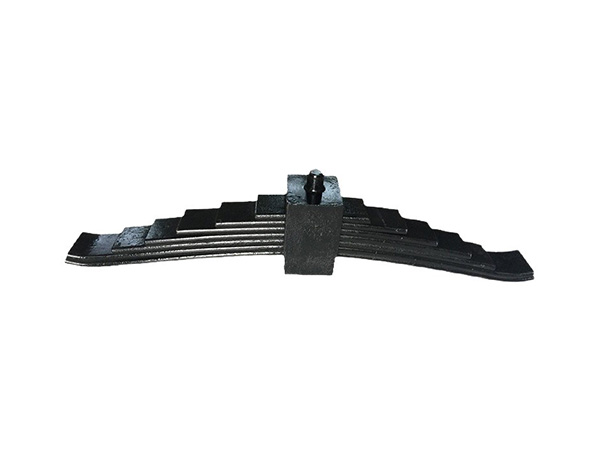
Multi-leaf springs consist of several steel strips (leaves) of varying lengths stacked together, with the longest leaf (the main leaf) running the full length of the assembly and shorter leaves progressively nested beneath it. The leaves are held together by a center bolt and clamped at each end by rebound clips that prevent individual leaves from separating excessively during travel.
The primary advantage of multi-leaf springs is their high load-carrying capacity. By distributing the load across multiple leaves, the assembly can support significantly heavier weights than a single-leaf design of comparable size. This makes multi-leaf springs the default choice for heavy duty trucks, buses, and agricultural machinery.
However, multi-leaf springs have inherent friction between adjacent leaves, which creates a phenomenon known as inter-leaf friction. This friction provides additional damping but can also produce noise, accelerate wear at contact surfaces, and make the suspension feel less refined, especially during light-load conditions.
The Mono-Leaf and Parabolic Spring Approach
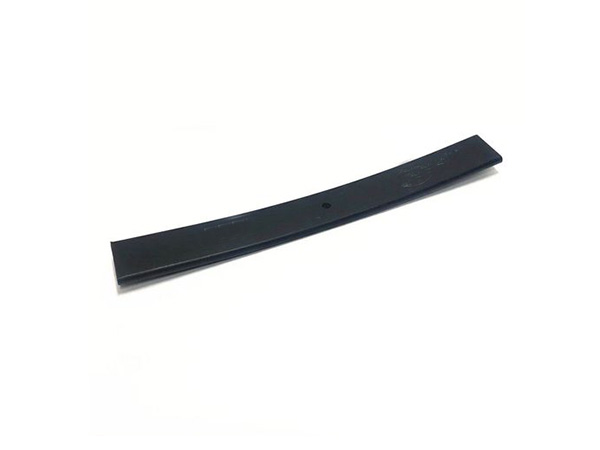
Mono-leaf springs, as the name suggests, use a single wide strip of steel, often tapered or shaped in a parabolic profile. Parabolic leaf springs represent an evolution of this concept, using a variable cross-section along the length of the spring to achieve a progressive spring rate without the complexity of multiple leaves.
The main benefit of mono-leaf and parabolic designs is the elimination of inter-leaf friction. Without leaves rubbing against each other, the suspension operates more smoothly and quietly. The ride quality improves noticeably, particularly when the vehicle is lightly loaded. Parabolic springs also weigh less than equivalent multi-leaf assemblies, which contributes to better fuel economy.
The trade-off is load capacity. Mono-leaf springs generally cannot match the maximum load ratings of multi-leaf designs, making them more suitable for medium-duty vehicles, light trucks, and passenger vehicles rather than the heaviest commercial applications.
Progressive Rate and Variable Geometry Designs
Modern leaf spring design has moved beyond the simple binary choice between multi-leaf and mono-leaf. Progressive-rate designs incorporate features such as variable-thickness leaves, tapered ends, and carefully engineered contact points to achieve a soft initial response that firms up progressively as the load increases.
This approach delivers a comfortable ride during normal driving while providing the stiff support needed when the vehicle is fully loaded. Many manufacturers now offer progressive-rate parabolic springs that compete with traditional multi-leaf designs in terms of load capacity while delivering superior ride quality.
Application Recommendations
For heavy duty commercial trucks operating at or near maximum load capacity most of the time, traditional multi-leaf springs remain the practical choice. For delivery vans, medium-duty trucks, and passenger vehicles where ride comfort is a priority and loads are more variable, parabolic or progressive-rate mono-leaf springs offer an excellent balance.
Fleet managers should consult with their suspension component supplier to understand which design is most appropriate for their specific vehicle models and usage patterns. A knowledgeable manufacturer can also provide custom spring rates and dimensions for specialized applications.
Conclusion
Both multi-leaf and mono-leaf spring designs have their place in commercial vehicle suspension. The right choice depends on a careful evaluation of load requirements, ride quality priorities, vehicle type, and budget constraints. Understanding the mechanical differences between these designs enables more informed purchasing decisions and better suspension performance across a fleet.
References
Dixon, J.C. (2015). The Shock Absorber Handbook (2nd ed.). SAE International, Warrendale, PA. — Chapter 4: Leaf Spring Suspension Systems.
Gillespie, T.D. (1992). Fundamentals of Vehicle Dynamics. SAE International. doi:10.4271/R-114.
Reimpell, J., Stoll, H., & Betzler, J.W. (2001). The Automotive Chassis: Engineering Principles (2nd ed.). Butterworth-Heinemann, Oxford.
Smith, C.E. (2019). Comparative Analysis of Leaf Spring Suspension Designs in Commercial Fleet Applications. SAE International Journal of Commercial Vehicles, 12(1), 89–101.