Current Location:
How to properly maintain leaf springs?
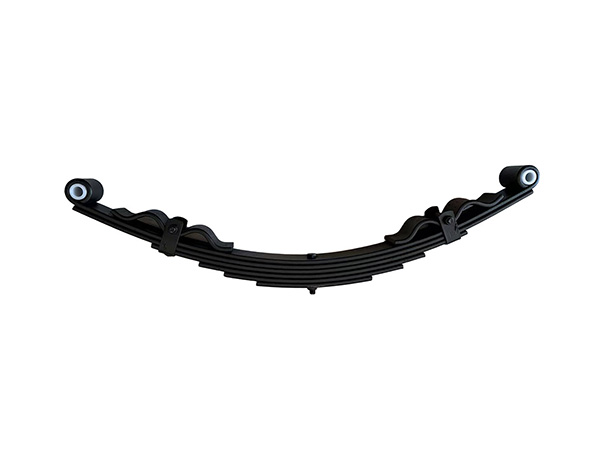
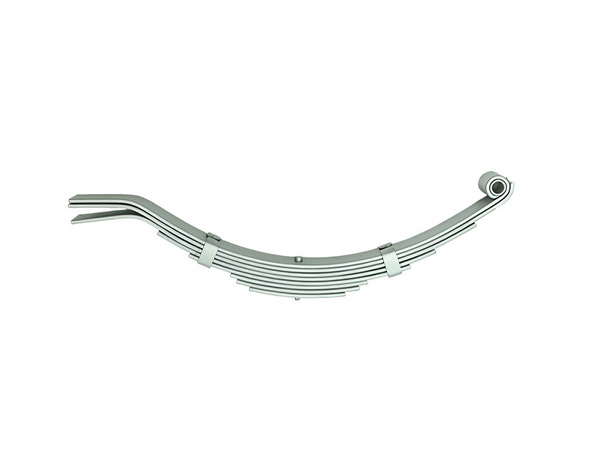
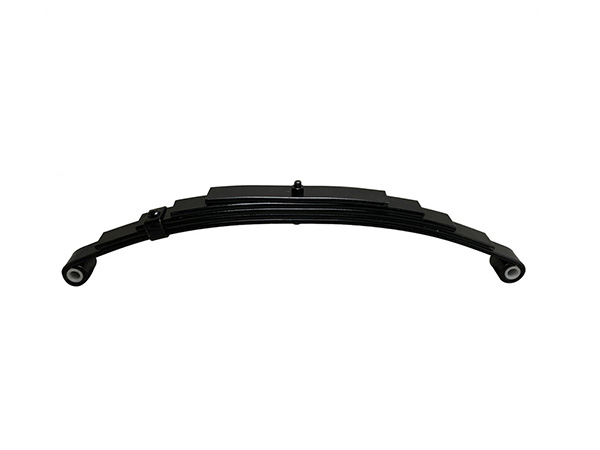
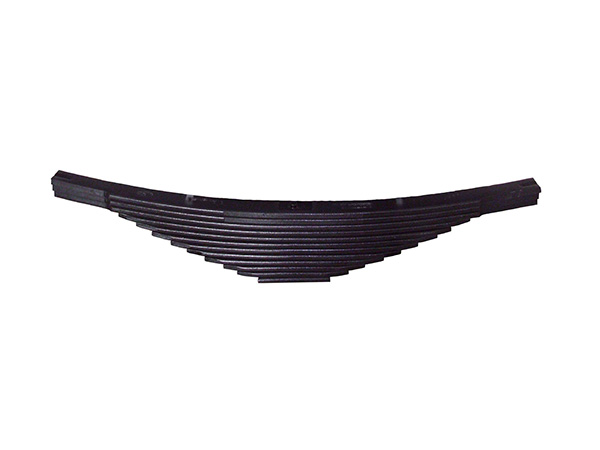
2026-06-16Leaf springs bear most of the vehicle’s load and impact force. Standardized periodic maintenance can eliminate hidden dangers such as fatigue cracks, corrosion and loose fittings, avoid sudden fracture failures, and greatly extend overall service life. The complete maintenance workflow is divided into daily inspection, regular fastening, lubrication, anti-corrosion care, auxiliary component matching and forbidden operation specifications.
1. Daily Visual Inspection Before and After Driving
Check the overall shape of leaf springs: Observe whether the spring arch is uniformly sagged, whether the vehicle body tilts to one side, and whether individual spring leaves are bent, cracked or broken.
Check gaps between spring plates: Clear embedded gravel, metal fragments and mud. Hard foreign matters will scratch the spring surface during bouncing and form crack sources.
Inspect fasteners: Check U-bolts, center bolts, spring hangers and shackles for looseness, deformation, thread slipping or fracture.
Check rubber bushings: Confirm no aging, cracking, hardening or falling off of shackle and hanger bushings. Damaged bushings cause abnormal torsion of leaf springs.
Check surface anti-rust coating: Mark areas with peeling paint, rust pits and corrosion spots for targeted anti-rust treatment.
2. Regular Torque Tightening of Fastening Components
Tighten U-bolts every 1,000–3,000 kilometers, following the factory specified torque value. Loose U-bolts create relative sliding between spring leaves, causing severe friction wear and stress notches.
Retighten the center bolt regularly to lock each spring leaf into alignment; a loose center bolt leads to lateral displacement and uneven stress distribution.
Check shackle pins and fixing nuts at each maintenance cycle; supplement lock washers if missing to prevent loosening under long-term vibration.
After heavy load transportation or driving on bumpy mountain roads, perform an additional re-tightening operation immediately.
3. Systematic Lubrication Maintenance
Lubricate the contact surfaces between overlapping spring leaves every maintenance cycle with high-temperature lithium-based grease. Dry metal friction generates high heat and micro-scratches, which easily expand into fatigue cracks.
Disassemble and clean the spring stack thoroughly before greasing to remove old hardened grease, silt and rust powder; apply grease evenly on both sides of each leaf.
Inject grease into shackle pins and hanger pin joints to eliminate dry metal friction and ensure flexible swing of the leaf spring assembly without jamming.
Avoid excessive grease that easily adheres to sand and dust; wipe off redundant grease after lubrication.
4. Anti-Corrosion and Surface Protection Maintenance
Timely cleaning: Rinse mud, seawater, road deicing salt and chemical sewage on leaf springs after driving on coastal, snowy or muddy roads. Salt erosion produces corrosion pits that sharply reduce fatigue resistance.
Derusting treatment: Use wire brushes or rust removers to clean rust spots and pits; polish the surface smooth before repainting.
Supplementary anti-rust coating: Spray chassis anti-rust paint or chassis armor on bare metal areas, covering all spring leaves, hangers and shackles. Repair peeling coating without delay.
For long-term vehicle parking: Coat leaf springs with anti-rust grease and cover with waterproof cloth to isolate humid air and rainwater.
5. Inspection and Replacement of Matching Auxiliary Parts
Shock absorber maintenance: Check for oil leakage, damping failure and deformation. Invalid shock absorbers cannot suppress high-frequency bouncing, accelerating fatigue fracture of leaf springs; replace defective shock absorbers in pairs.
Limit block inspection: Ensure upper and lower rubber limit blocks are intact. Missing or damaged limit blocks lead to over-compression and direct collision of spring leaves under heavy load.
Axle balance calibration: Regularly calibrate axle balance to eliminate periodic vibration impact on leaf springs during high-speed driving.
Replace aging accessories: Replace cracked, hardened rubber bushings and deformed shackles in a timely manner to avoid abnormal additional torsion stress.
6. Prohibited Operations to Avoid Damaging Leaf Springs
Do not arbitrarily weld, cut or perform local heating on leaf springs. High temperature destroys the quenching and tempering metallographic structure, reducing toughness and making springs brittle.
Do not privately modify leaf springs by cutting leaves or adding unqualified auxiliary springs, which disrupt the original stress design and cause local stress concentration.
Avoid long-term overloading and unilateral concentrated cargo; evenly distribute goods to prevent asymmetric torsion of the spring assembly.
Avoid high-speed crossing of potholes and speed bumps, as instantaneous impact load initiates surface microcracks.
Do not continue to use permanently sagged, cracked or corroded leaf springs; replace damaged parts in time to prevent sudden breakage during driving.
7. Seasonal Special Maintenance Tips
Winter: Frequently wash away road snow melting salt; increase anti-rust coating frequency to slow corrosion.
Rainy season: Check chassis drainage to prevent long-term soaking of leaf springs in accumulated water.
Summer: Recheck grease condition; high temperature easily causes grease loss and dry friction between spring leaves.
Summary
Standard leaf spring maintenance centers on four core points: regular tightening to eliminate relative displacement, sufficient lubrication to reduce friction wear, comprehensive anti-corrosion to avoid stress pits, and timely replacement of matched damaged accessories. Combined with standardized loading and gentle driving habits, maintenance work can effectively reduce fatigue damage and prolong the overall service cycle of leaf springs.
References
APA 7th Edition
Kong, Y. S., Omar, M. Z., & Chua, L. B. (2014). Fatigue life prediction of parabolic leaf spring under various road conditions. Engineering Failure Analysis, 46, 92–103.
MLA 9th Edition
Kong, Y. S., et al. "Fatigue Life Prediction of Parabolic Leaf Spring under Various Road Conditions." Engineering Failure Analysis, vol. 46, 2014, pp. 92–103,
GB/T 7714-2015
KONG Y S, OMAR M Z, CHUA L B. Fatigue life prediction of parabolic leaf spring under various road conditions[J]. Engineering Failure Analysis, 2014, 46:92-103.