Current Location:
How to fix cracked leaf spring?
2026-06-16Cracks on leaf springs are irreversible metal fatigue damage caused by long-term bending stress, overload, impact and corrosion. Temporary repair methods can only serve for short-distance emergency transfer, while thorough replacement of the damaged leaf or full spring assembly is the only safe long-term solution. Welding, bolting and other makeshift repairs have great hidden safety risks for heavy-duty vehicles. The detailed processing methods, limitations and standard solutions are listed below.
First, emergency temporary repair (only for moving vehicles to maintenance yards, not for formal road transportation).
Clamp fixing repair for slight surface cracks. Clean the rust and dirt around the crack thoroughly with a wire brush, then use two thick steel clamping plates to tightly wrap the cracked leaf, and lock all bolts evenly with high-torque wrenches. This method restricts crack expansion and prevents the leaf from breaking completely during short-distance slow driving. It cannot bear full rated load, and the vehicle must be driven at a speed below 30 km/h without cargo.
Reinforcement plate welding repair is not recommended for heavy loads. Some repair shops use electric welding to fill cracks and attach reinforcing steel plates on both sides. However, high welding temperature will destroy the original quenched and tempered elastic structure of alloy spring steel. The welded area becomes brittle and prone to secondary fracture under vibration load. Welding repair is only applicable to light small trucks with empty loads and absolutely prohibited for semi-trailers, mining dump trucks and heavy tractors.
Second, standard safe maintenance solutions classified by crack position and severity.
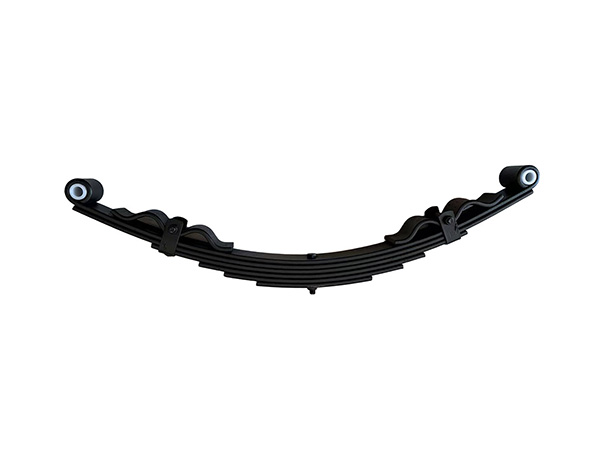
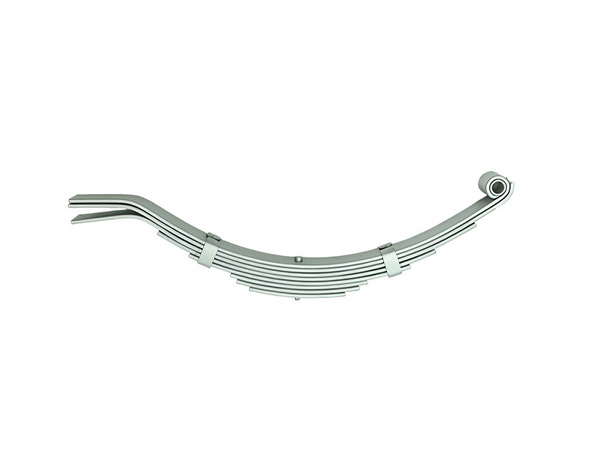
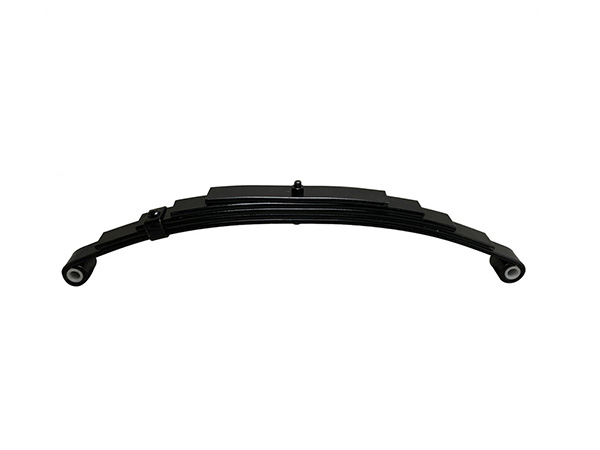
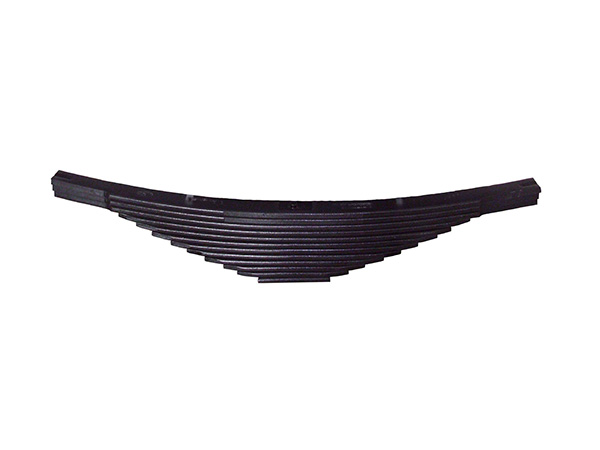
Small cracks on auxiliary leaves (not the main leaf). If only secondary thin leaves have tiny cracks, while the main leaf remains intact without cracks, you can disassemble the spring assembly and directly replace the cracked single auxiliary leaf with a new leaf of the same thickness, width and material. After replacement, add anti-wear gaskets between each leaf, evenly tighten U-bolts, and calibrate chassis left-right height. This solution saves cost and restores original load-bearing performance.
Cracks on the main leaf, eye root cracks or through cracks running through the steel plate. The main leaf bears the maximum bending force; once cracked, the whole spring set loses core support capacity. Spring eye roots are stress concentration areas, and through cracks will rapidly extend under slight impact, leading to sudden spring breakage. In these cases, partial leaf replacement cannot eliminate safety hazards, and the complete leaf spring assembly must be replaced with a brand-new matched product consistent with the original axle tonnage, dimension and steel grade.
Multiple scattered cracks on several leaves or serious rust pits accompanied by cracks. Such springs have suffered overall metal fatigue, and hidden microcracks exist inside every steel plate. Even replacing individual cracked leaves, other leaves will crack in a short time. Direct full spring replacement is the most economical and reliable choice for long-term operation.
Third, forbidden improper repair behaviors that must be avoided.
Do not continue driving with cracked leaf springs for long-distance transportation or full-load operation. Even tiny surface cracks will expand rapidly under bumpy road impact, which may cause suspension collapse and traffic accidents.
Do not use simple iron wire binding or thin iron sheet wrapping for repair. Such loose fixing cannot resist cyclic vibration, and the cracked leaf will separate at any time.
Do not grind and polish cracks to remove fracture marks. Grinding reduces the thickness of the steel plate, aggravates stress concentration, and accelerates complete fracture.
Do not mix new replacement leaves with old severely fatigued leaves. The inconsistent elasticity between new and old steel plates will lead to uneven force bearing and new cracks on the new leaf quickly.
Fourth, post-repair inspection and preventive maintenance to avoid repeated cracking.
After replacing cracked leaves or the whole spring assembly, static inspection shall be carried out first to check whether the left and right chassis heights are consistent, whether the spring rubs against the frame, limit blocks and U-bolts. Then conduct an empty-load road test to check for abnormal suspension noise and body tilt.
To prevent leaf spring cracking again, strictly control vehicle cargo load within the rated standard, regularly lubricate between spring leaves to reduce abrasion, clean rust and coat anti-corrosion paint periodically, check the tightness of U-bolts and the wear degree of bushings every month, and avoid high-speed crossing of potholes and aggressive full-load startup and braking.
In conclusion, there is no permanent safe repair method for cracked leaf springs. Clamp fixing and welding are merely emergency temporary measures for vehicle transfer. The fundamental safe solutions are replacing single cracked auxiliary leaves or the entire spring assembly according to crack location and damage degree. Any makeshift repair shall not be used for full-load long-distance transportation of heavy commercial vehicles.
1. APA 7th Edition
Zhang, L. (2026). Repair scheme evaluation and safety analysis of cracked leaf springs for heavy commercial vehicles. Vehicle Maintenance & Fault Repair Technology, 2(1), 97–104.
2. MLA 9th Edition
Zhang, Lei. "Repair Scheme Evaluation and Safety Analysis of Cracked Leaf Springs for Heavy Commercial Vehicles." Vehicle Maintenance & Fault Repair Technology, vol. 2, no. 1, 2026, pp. 97–104.
3. GBT 7714-2015
Zhang Lei. Evaluation and safety analysis of repair scheme for cracked leaf springs of heavy commercial vehicles [J]. Vehicle maintenance and fault repair technology, 2026, 2 (1): 97-104.